Dievio
Why neobanks need a different lead list approach
Most outbound teams treat a neobank like a SaaS company with a nicer app. That assumption breaks the moment the first reply comes back. A neobank is a regulated financial institution with a charter or a license, a supervisory relationship with a regulator, a sponsor bank dependency, a card processor, an acquiring partner, and a reconciliation stack that has to survive an audit. The buyer committee is smaller than you expect, the compliance function sits in the room far earlier than in generic SaaS, and the growth leader you are pitching is measured on unit economics per funded account rather than pipeline created.
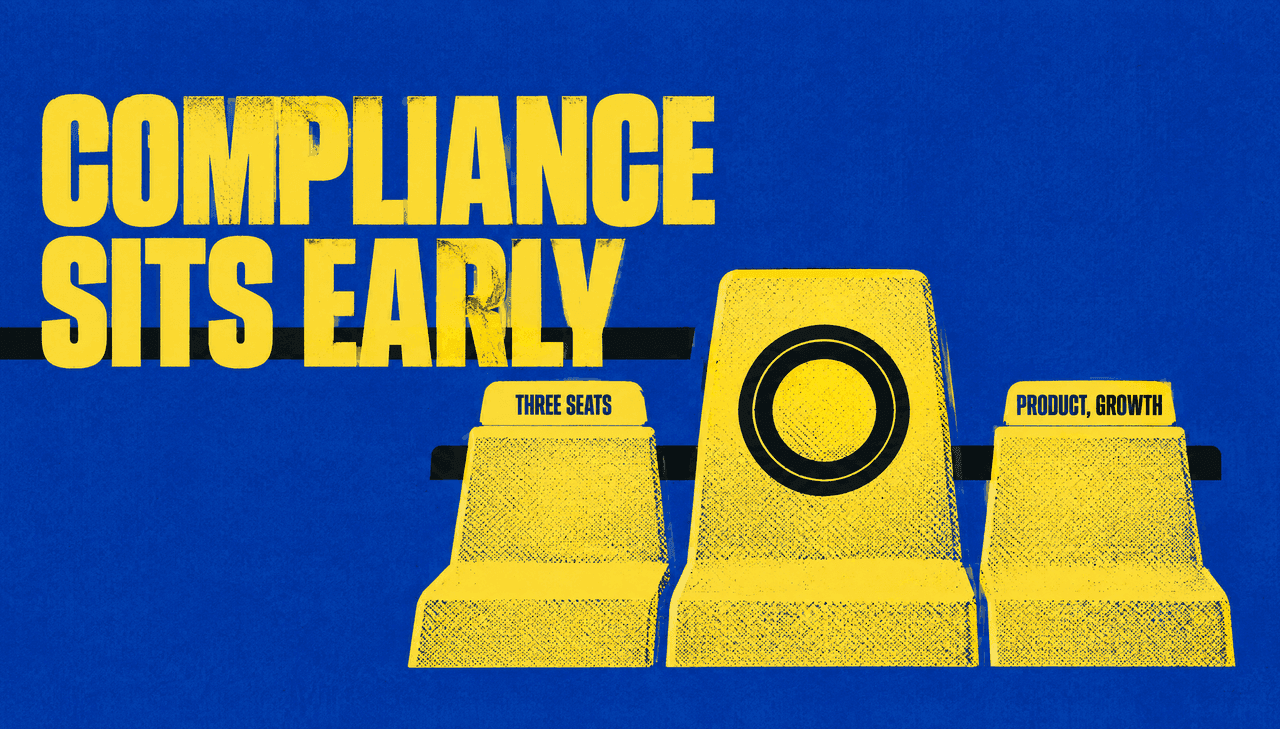
That changes how you build the list. A generic "fintech" filter that returns payments processors, crypto exchanges, lending marketplaces, insurtech brokers, and wealth apps lumps together buyers who have almost nothing in common in terms of licensing, regulatory posture, and purchase triggers. What you actually need is a list segmented around the specific institution type — a licensed digital bank, an e-money institution, a BaaS-powered challenger — and then around the three functions that sign off on most vendor decisions: product, compliance, and growth.
This is a vertical playbook, not a theory piece. By the end you should be able to define a neobank ICP, translate it into filter logic, preview the segment size before you spend anything, enrich the right personas, and run a sequence that a risk-aware buyer will actually answer. If you already know you want the vertical-specific version of this, the FinTech lead lists page covers the broader segments across payments, lending, and compliance.
The neobank buyer committee: product, compliance, and growth
In enterprise software, a deal often touches six to ten stakeholders. In a Series B neobank, the same decision is frequently made by three people and a founder who still reviews anything with regulatory exposure. The committee is compressed, which is good news for outbound — but only if you target the right three seats and understand what each one is optimizing for.
Product buyers
Typical titles: Chief Product Officer, VP Product, Head of Product, Director of Product, Senior Product Manager owning onboarding, cards, or payments. Product leaders at neobanks own the roadmap for account opening, KYC flows, card issuance, transaction rails, and increasingly the internal tooling that lets operations scale without linear headcount. They care about time-to-launch, vendor integration surface, and whether a tool reduces the number of bespoke internal systems their engineers have to maintain.
Reporting lines vary: at smaller neobanks product reports to the CEO or CTO; at larger ones it reports to a COO or Chief Product & Technology Officer. What matters for your sequencing is that product is usually the technical evaluator and often the internal champion.
Compliance buyers
Typical titles: Chief Compliance Officer, Head of Compliance, BSA/AML Officer, Head of Financial Crime, Director of Risk & Compliance, KYC/KYB Lead, Internal Audit Manager. These buyers carry personal and institutional liability. A failed AML program is not a churn event — it's a consent order. They care about audit trail, documentation, regulatory mapping, false positive rates, and whether your solution has ever been examined by a regulator.
Compliance is often the blocker and the accelerator at the same time. If compliance signs off early, deals close faster than in almost any other vertical because the remaining objections are commercial. If compliance is engaged late or clumsily, the deal stalls for months.
Growth buyers
Typical titles: Head of Growth, VP Growth, Director of Performance Marketing, Head of Lifecycle & CRM, Head of Customer Acquisition, Head of Retention. Neobank growth leaders are unusual because they are usually measured against CAC payback, activation rate, direct deposit penetration, and monthly active funded accounts — not raw signups. They have seen a thousand "we can lower your CAC" pitches and they are tired of top-of-funnel vanity offers that never convert to funded accounts.
The buyer committee logic here mirrors what we laid out in the cross-vertical framework on SaaS lead list vs FinTech lead list, where the key difference is that FinTech committees add a regulated approver who does not exist in SaaS.
| Persona | Core mandate | Primary objection | What makes them engage |
|---|---|---|---|
| Product (CPO, VP Product, PM) | Ship revenue-critical flows fast without technical debt | "This adds another integration for my engineers" | Concrete reduction in build scope, clear API docs, reference architecture |
| Compliance (CCO, BSA/AML Officer, Head of Financial Crime) | Keep the program defensible under examination | "Show me the audit trail and the regulatory mapping" | Regulator-facing documentation, false positive metrics, named regulatory frameworks |
| Growth (Head of Growth, Lifecycle, Performance) | Improve CAC payback and activation to funded accounts | "Signups don't pay the bills — funded accounts do" | Segment-level lift data, lifecycle targeting, measurable post-activation impact |
Defining your ICP: licensing, stage, geography, and product line
The single biggest list-quality failure in FinTech outbound is a company-level filter that returns lookalikes. "Fintech" as a category label is nearly useless. You need to decide what kind of regulated entity you actually sell to, because the licensing status determines budget, procurement process, and whether your product is even relevant.
Licensing and charter status
- Full banking license / national charter. Heaviest compliance burden, longest sales cycles, largest budgets, most formal procurement.
- E-money institution (EMI) or payment institution (PI) license. Common in the UK and EU. Fast-moving, card and wallet heavy, strong fit for KYC, fraud, and ledger tooling.
- Sponsor-bank / BaaS dependent. The neobank itself is not licensed; a partner bank holds deposits. Compliance priorities are dictated partly by the sponsor bank's program requirements.
- Broker-dealer or investment-licensed. Different rulebook entirely — suitability, best execution, marketing restrictions. Only target if your product maps to securities rules.
- Unlicensed fintech software. Not a neobank. This is where lookalike pollution comes from and where your messaging will misfire.
Stage and size
Seed and pre-launch neobanks rarely have budget for third-party tooling outside their core stack and often build in-house. Series A is where the first real vendor evaluations happen, usually for KYC, fraud, and analytics. Series B and C is the sweet spot: product is staffed, compliance is a real function with a real headcount, and growth has a budget line. Post-Series D neobanks behave like incumbent banks — long cycles, procurement committees, security reviews measured in quarters.
Geography
Regulatory regime drives everything. A UK EMI, a German BaFin-licensed institution, a Brazilian SCD, a Singapore MAS-licensed digital bank, and a US state-chartered or nationally chartered bank have different vendor approval paths. Segment your list by jurisdiction and localize both your proof points and your compliance language. A regulator reference that lands in London falls flat in São Paulo.
Product line
Neobanks specialize. Current accounts and cards, remittances and FX, SME lending and invoicing, payroll and earned wage access, investing and wealth, crypto-adjacent custody, or B2B banking for SMBs. Each product line implies a different tech stack, a different risk profile, and a different growth motion. A remittance neobank cares about cross-border rails and FX spread; an SME lender cares about underwriting data and collections; a B2C card neobank cares about activation and interchange economics.
Filter logic for digital banking prospect lists
Once your ICP is defined, translate it into filters. In a modern B2B lead search interface you are typically combining firmographic, technographic, and role-level criteria. The example combination below is what a credible neobank segment looks like for a vendor selling compliance or onboarding infrastructure.
| Filter dimension | Include | Exclude | Why it matters |
|---|---|---|---|
| Industry / vertical | Digital banking, neobanking, challenger bank, payments institution | Broad "financial services," insurance brokerage, wealth advisory | Removes non-bank lookalikes before you burn credits |
| Company keywords | "neobank," "digital bank," "e-money," "current account," "BaaS" | "crypto exchange," "trading app" unless relevant | Keyword layers separate licensed banks from adjacent fintech |
| Headcount | 50–1,000 | <20 (usually pre-product), >5,000 (incumbent process) | Staffed compliance and product functions appear around 50+ |
| Geography | Target jurisdiction list | Out-of-scope regimes | Regulatory relevance and language fit |
| Funding stage | Series A–C, or profitable | Pre-seed, bootstrapped-at-scale if budget unknown | Budget availability signal |
| Job titles | Compliance, Risk, Product, Growth, Financial Crime | Pure engineering, general marketing | Committee coverage, not volume |
| Seniority | Director and above, plus key individual contributors in compliance | Interns, coordinators | Budget authority plus practical evaluators |
Two operational notes. First, preview before you commit — using preview lead counts lets you sanity-check that a narrow filter combination still returns a workable segment. If your filter returns 40 contacts across five countries, the segment is too thin to support a real cadence; widen geography or seniority rather than diluting titles. Second, build the list one persona at a time rather than one giant export. A combined list of 3,000 mixed titles produces one generic message; three lists of 1,000 each produce three relevant ones.
Persona messaging angles for product, compliance, and growth buyers
The mistake in FinTech outbound is writing one message and swapping the first name. The message has to change because the risk being managed is different in each seat. Below is the mapping we use when building sequences for neobank buyers.
| Persona | Pain | Trigger | Message angle | Proof point to lead with |
|---|---|---|---|---|
| Product leader | Roadmap blocked by integration work; internal systems accumulate | New product launch, new market entry, onboarding flow rebuild | "Reduce build scope for onboarding by X weeks without adding a system your team maintains" | Reference architecture, sandbox, comparable integration timelines |
| Compliance / BSA-AML | False positives, manual review backlog, examiner scrutiny | Regulatory exam, new license, sponsor bank program review | "A defensible audit trail and documented regulatory mapping, not another alert queue" | Framework-by-framework mapping, model documentation, review workflow |
| Growth leader | CAC payback slipping; signups don't become funded accounts | Funding round, CAC ceiling hit, channel saturation | "Target activation and direct deposit, not raw installs — here's the segment-level lift" | Post-activation metric movement, lifecycle segmentation, channel-level economics |
| COO / founder (multi-thread) | Cost-to-serve scaling faster than revenue | Headcount plan, efficiency mandate | "Same account volume, fewer manual touches per account" | Ops-per-account benchmarks, automation coverage |
Writing the first line for a regulated buyer
Compliance and risk buyers have a low tolerance for hype and a high sensitivity to imprecision. Avoid superlatives. Name the regulatory framework, name the function, name the specific workflow. "We help neobanks automate KYC" reads as noise. "We help EMI-licensed neobanks cut manual review of onboarding alerts by removing duplicate entity matches before they hit the analyst queue" reads as a peer who has been in the room.
Product buyers respond to specificity about integration surface — endpoints, webhooks, sandbox access, data model. Growth buyers respond to unit economics language: CAC, payback period, activation rate, funded account ratio, LTV per segment.
For a deeper treatment of the risk-side buyer specifically, our companion piece on targeting FinTech lead lists segments covers how to slice compliance and financial crime roles across jurisdictions.
Compliance buyer outreach playbook
Compliance outreach follows a different rhythm than growth outreach. Sequencing rules of thumb:
- Lead with documentation, not a demo request. Offer a one-page regulatory mapping or a sample audit artifact. Compliance buyers evaluate evidence before they evaluate vendors.
- Use email over cold call. Compliance calendars are packed with review meetings; an unscheduled call is an interruption, but a well-written email with an attachment gets read.
- Do not use hype language about "AI-powered" anything. Position automation as increased consistency and reduced analyst burden, with human review preserved where required.
- Expect a longer lag. A compliance buyer may sit on your email for three weeks and then reply with a detailed technical question. Multi-touch sequences over four to six weeks outperform three-touch sprints.
- Always include the "why now" hook. A regulatory deadline, an exam finding, a new product launch under an existing license, or a sponsor bank program review.
If your first email to a Chief Compliance Officer cannot be forwarded to an examiner without embarrassment, rewrite it.
Product and growth buyer sequencing
Product and growth can be multi-threaded in the same account without overlap if you keep the value proposition distinct. Product gets the build-versus-buy conversation; growth gets the acquisition and activation conversation. In a three-touch window, the two sequences should share a trigger event (a funding round, a product launch, a market expansion) but never share a message body.
- Thread A — Product: Touch 1: integration scope and reference architecture. Touch 2: a short technical breakdown or sandbox link. Touch 3: offer a 20-minute architecture review with an engineer, not a salesperson.
- Thread B — Growth: Touch 1: segment-level activation insight tied to their product line. Touch 2: a benchmark comparison for their market. Touch 3: offer a working session on lifecycle targeting.
- Thread C — Compliance (parallel, slower): Touch 1: documentation offer. Touch 2: audit-trail explainer. Touch 3: reference to a comparable regulated institution.
To run Threads A and B you need verified emails for specific titles, which is where LinkedIn profile enrichment becomes useful: you identify the exact people from the company page, then resolve their contact data rather than guessing at patterns.
Building the list: search, preview, enrichment workflow
Here is the repeatable workflow we recommend for neobank segments, from whiteboard to export.
- Define the institution profile. Choose license type, product line, geography, headcount band, and funding stage. Write it down as a sentence — every subsequent filter must be justifiable by that sentence.
- Build the company-level filter set. Industry plus keyword layers plus geography plus headcount. This is the step where lookalikes get excluded.
- Add the persona layer. Title clusters for product, compliance, and growth. Keep them separate so you can export each as its own list.
- Preview the segment. Check counts per persona. If compliance returns nine contacts in-country and product returns four hundred, your ICP is probably skewed toward one function — adjust or accept the asymmetry consciously.
- Enrich and verify. Resolve emails and, where relevant, phone numbers. Verification before export is cheaper than handling bounces after.
- Export and load into the sequencing tool. Tag by persona and by trigger event so reporting isn't a single blended reply rate.
- Automate refresh. Neobank org charts move fast — compliance leads turn over, product leaders get promoted, new licenses change the addressable set. Use the B2B leads API to run recurring refreshes instead of rebuilding the list by hand each quarter.
Salesforce's guide to B2B lead generation strategies frames this as aligning the data layer with the buying process, which is exactly right for FinTech — the data layer has to reflect the regulatory and committee structure, not just the industry label.
Data quality and validation for regulated buyers
Stale or misclassified data costs more in FinTech than in almost any other vertical. Sending a compliance-heavy pitch to a marketing coordinator wastes the touch; worse, sending a generic growth pitch to a BSA officer can look like you do not understand the environment you claim to serve. Both outcomes damage sender reputation in a small, well-networked industry where buyers talk to each other.
Three validation habits that pay off:
- Re-verify titles before each campaign. Product leaders move companies frequently and compliance leaders are often promoted internally — the email may still work while the title is a year out of date.
- Cross-check company status. Acquisitions and license changes materially affect relevance. A neobank acquired by an incumbent bank may no longer procure the way it did.
- Exclude previous non-responders per persona, not per account. A growth leader ignoring you says nothing about whether compliance would engage.
Validation depth matters most when the segment is small. On a 500-contact list, a 5% error rate is 25 wasted touches; on a 50-contact compliance segment, it is a meaningful share of your addressable market.
Outbound cadence for neobank prospects
FinTech buyers are email-heavy, LinkedIn-active, and call-averse in early stages. A practical cadence across three weeks:
| Day | Channel | Persona focus | Intent |
|---|---|---|---|
| 1 | Product or Growth | Specific trigger-based opener with a clear value hypothesis | |
| 3 | LinkedIn connect + note | Same persona | Light context, no pitch, profile visibility |
| 5 | Compliance (separate thread) | Documentation offer, framework-specific | |
| 8 | Product or Growth | Proof point or benchmark, new angle | |
| 12 | LinkedIn message | Both threads | Short question, low friction |
| 15 | Second persona in account | Multi-thread the committee | |
| 18 | Call (only if numbers verified) | Senior stakeholder | Direct but brief, reference the email |
| 21 | All threads | Close-the-loop note, leave the door open |
HubSpot's overview of sales prospecting is a useful baseline for cadence structure, but note the FinTech adjustment: compliance touches should be spaced wider and carry less frequency pressure than growth touches.
Prioritizing within the neobank list
Not every contact deserves the same effort. Scoring the segment before you write sequencing logic keeps your best reps on the best accounts. A simple scoring model for neobank buyers:
- +3 Licensed entity (charter, EMI, PI) rather than sponsor-dependent only.
- +2 Headcount in the 100–800 band — staffed functions, still fast procurement.
- +2 Series B–C funding within the last 18 months — fresh budget and a growth mandate.
- +2 Recent trigger: new product launch, new market, license expansion, compliance hiring spree.
- +1 Target persona is compliance or product — both have direct vendor ownership.
- -2 Company recently acquired by an incumbent — procurement resets and freezes.
LinkedIn's explanation of lead scoring is a reasonable grounding for the mechanics, though in FinTech the weighting should lean more heavily on regulatory status and trigger events than on engagement signals — a compliance officer who never opens your email is still a valid target; a marketing coordinator with five opens is not.
Common mistakes when building neobank lead lists
- Treating neobanks like generic SaaS. Same filters, same messaging, same cadence — and the same flat results. The regulated approver is missing from the plan.
- Ignoring licensing status. Without it you cannot predict budget, procurement path, or whether your product is even relevant.
- Single-threading the account. Reaching only the Head of Growth and never touching product or compliance leaves the deal hostage to a champion who cannot approve it.
- Over-emailing compliance buyers. High frequency reads as pressure. Compliance responds to substance at a slower cadence.
- Blending personas into one export. You lose the ability to report per-persona reply rate, and you inevitably write the lowest-common-denominator message.
- Ignoring sponsor bank dynamics. For BaaS-dependent neobanks, the sponsor's program requirements often determine tooling approval. Map the sponsor relationship where you can.
- Never refreshing the list. FinTech org charts and licenses change faster than almost any other vertical. A static list degrades in a quarter.
Putting it together: a repeatable neobank list workflow
The whole playbook compresses to seven steps: define the institution profile, build company-level filters that separate licensed digital banks from lookalikes, layer persona title clusters for product, compliance, and growth, preview the segment size per persona before spending, enrich and verify contacts, sequence each persona with its own value proposition and cadence, then automate refresh so the list stays current as licenses and org charts shift.
What makes this work in practice is not the tooling — it is the discipline of refusing to send a compliance message to a growth buyer and refusing to treat an unlicensed fintech app as a neobank. Get the segmentation right and the sequencing mostly writes itself.
If you want to start from pre-built segments rather than a blank filter screen, the FinTech lead lists hub covers the vertical slices across payments, lending, compliance, product, and growth. Build your neobank committee once, run it as three parallel threads, and refresh it quarterly rather than rebuilding from scratch every campaign.