Dievio
Running account-based campaigns for multiple clients at the same time means running multiple isolated data operations at the same time. Each client has a different ICP. Each ICP has a different set of filters, a different set of title rules, and a different expected deliverable format. If those lists cross paths—even once—you have a compliance problem, a deliverability problem, and a trust problem with the client.
This article maps the complete end-to-end workflow for agencies that manage three, five, or ten ABM clients simultaneously. It covers the architecture decisions that keep client data isolated, the segmentation logic that makes lists actionable, the quality gates that protect deliverability, and the delivery cadences that make recurring engagement sustainable. The workflow spans from initial client intake through to automated list delivery, providing a repeatable system that scales without adding headcount.
Why Multi-Client ABM List Operations Break Down
Most agencies start their ABM list operations with a single-client mindset. They build lists manually, export to spreadsheets, and send deliverables via email. This works fine for one client. The problems emerge when you add a second client—and they compound with every additional client you take on.
The core failure modes fall into four categories:
- Data contamination: Contacts from Client A's industry get pulled into Client B's campaign because filters weren't properly reset. This is the most visible and trust-destroying mistake.
- ICP drift: The ideal customer profile evolves over time as the client learns from campaign results, but the list-building team doesn't receive updated criteria or builds against outdated assumptions.
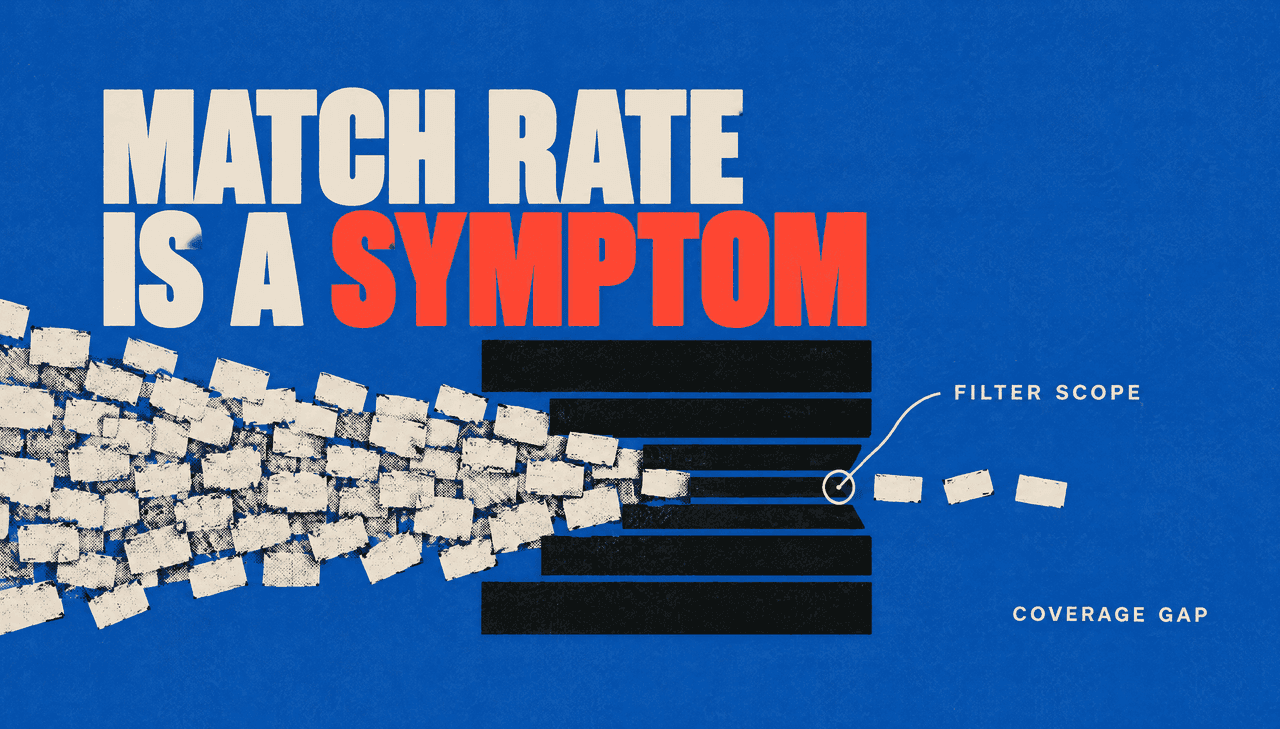
- Stale data: Lists built once and delivered never get refreshed. By the time a 90-day-old list reaches the outreach team, 30-40% of the contacts have changed roles, left companies, or had their emails invalidated.
- Process inconsistency: Without standardized delivery formats and quality checkpoints, each client gets a slightly different output, making comparison impossible and scaling unmanageable.
Effective sales prospecting at scale requires disciplined processes that prevent these failure modes from occurring. According to HubSpot on sales prospecting, the most successful outbound operations treat list quality as a non-negotiable standard, not a variable that can be adjusted when timelines are tight.
Client ICP Validation: The Pre-Segmentation Gate
No segmentation begins without an approved ICP document. This is a non-negotiable gate in the workflow. The ICP document serves as the contract between the agency and the client, and every list build references it directly. Skipping this step leads to misaligned targeting, wasted budget, and difficult conversations about what "qualified" actually means.
The ICP validation process starts with a structured intake call where you gather firmographic requirements, stakeholder definitions, and business objectives. From this intake, you draft an ICP document that specifies the following:
- Company-level criteria: Industry classification, company size ranges, geographic focus, revenue thresholds, funding stage, technology stack, and customer segment served.
- Buyer-level criteria: Target job titles, seniority tiers, department affiliations, decision-making authority, and buying committee roles.
- Intent and behavioral signals: Keywords that indicate active research, content consumption patterns, or technology adoption signals that align with the client's solution.
- Exclusion criteria: Company types, industries, or title tiers that are explicitly out of scope. These are as important as the inclusion criteria.
Once drafted, the ICP document goes through a validation phase where you run preview queries against your data source to confirm that the defined criteria produce a viable list size. An ICP that returns 50 contacts for an entire country is not actionable. An ICP that returns 500,000 contacts needs narrowing. The sweet spot for most ABM campaigns is between 1,000 and 10,000 target accounts, with a contact-to-account ratio of 3:1 to 5:1 for multi-threaded outreach.
After validation, both the agency and the client sign off on the ICP document. This sign-off triggers the segmentation architecture phase and establishes the baseline against which future list quality is measured.
Multi-Client Segmentation Architecture
Segmentation architecture is the structural backbone of a scalable multi-client list operation. The goal is to build a system where each client's data exists in complete isolation while sharing infrastructure and tooling efficiently. The architecture operates across four distinct layers, each with its own purpose and set of controls.
Segmentation Layer Overview
| Layer | Purpose | Implementation | Isolation Mechanism |
|---|---|---|---|
| Client ID Isolation | Prevents any cross-client data access | Separate workspace per client | Unique client identifiers, separate export paths |
| Industry Vertical | Groups accounts by sector for targeting alignment | Primary industry classification tags | Vertical tags scoped to client workspace |
| Company Size Tier | Enables differentiated outreach strategies | Employee count bands (1-10, 11-50, 51-200, 201-500, 501-1000, 1000+) | Size filters applied within client context |
| Seniority Tier | Prioritizes contact selection within accounts | C-Suite, VP, Director, Manager, Individual Contributor | Title mapping rules scoped per client ICP |
| ICP Fit Score | Quantifies alignment with client ideal customer profile | Weighted scoring across firmographic and technographic dimensions | Score calculated within client-specific ICP parameters |
The tagging schema is critical to maintaining isolation. Each client workspace uses a prefix convention—such as CLIENT_A_, CLIENT_B_—applied to all tags, filters, and export files. When building lists, all queries are prefixed with the client identifier. When exporting, all filenames include the client identifier and a date stamp. This convention makes it immediately obvious which client a file belongs to and prevents accidental cross-loading into the wrong CRM or outreach tool.
For agencies running more than five clients simultaneously, workspace isolation should be enforced at the tooling level. Many data platforms, including Dievio, support API-based workspace management that allows you to create separate environments programmatically. This means you can spin up a new client workspace via API call, configure the segmentation filters, and have it ready for list building without manual setup.
Filtering Logic for Multi-Tenant Environments
Within each client workspace, the filtering logic follows a cascading structure:
- Hard filters first: Industry, geography, company size range—these reduce the universe dramatically and cannot be overridden by soft filters.
- Medium filters second: Funding stage, customer segment, technology adoption signals—these narrow the focus and are adjustable per campaign phase.
- Soft filters last: Title variations, seniority tiers, intent signal density—these determine contact-level prioritization within the filtered account set.
By applying filters in this order, you maintain a consistent account universe that is stable across campaigns, while the contact-level prioritization can be adjusted independently for each outreach sequence. This is important for ABM campaigns that want to reach different seniority tiers in different sequences—for example, reaching C-level to secure a meeting and reaching individual contributors to maintain engagement between meetings.
ABM List Building by ICP Tier
Within a single client's ICP, not all accounts are equally valuable or equally likely to convert. ABM campaigns benefit from explicit tiering that maps account priority to outreach intensity, content strategy, and resource allocation. The three-tier model is the most widely adopted framework for B2B ABM campaigns.
Tier 1: Named Account Priority
Tier 1 accounts are your highest-priority targets. These are often identified directly by the client—competitors of their best customers, companies in adjacent verticals that have expressed interest, or organizations that match the profile of their most valuable accounts. For Tier 1 accounts, the outreach strategy is highly personalized, multi-threaded, and resource-intensive.
For each Tier 1 account, you should identify 3-5 contacts across different seniority levels and functional areas. The goal is to establish multiple touchpoints within the account, increasing the likelihood that at least one thread resonates. Contact selection for Tier 1 follows these criteria:
- Economic buyer: C-level executive or VP with budget authority who can approve the purchase.
- Technical evaluator: Director or Manager level with influence over product or technical evaluation.
- Champion builder: Individual contributor or Manager who can become an internal advocate.
- End user: Where applicable, the person who will use the product day-to-day.
Tier 2: Strategic Adjacencies
Tier 2 accounts match the ICP but are not on the client's direct radar. These accounts are valuable for pipeline diversification and often have a faster sales cycle because they are less likely to be actively pursued by competitors. For Tier 2, build 2-3 contacts per account, focusing on economic buyer and champion builder roles.
Tier 3: White Space Expansion
Tier 3 accounts are in adjacent markets or segments that the client has not explicitly targeted but could serve. These accounts require a broader, less personalized approach and are often included in nurture sequences or awareness-stage campaigns. For Tier 3, build 1-2 contacts per account, prioritizing early adopters and innovation-minded buyers.
Contact Priority Scoring Within Tiers
For each contact within a tier, apply a contact priority score that considers role relevance, seniority alignment, and engagement history. The most effective B2B scoring models combine demographic data (title, function, seniority) with firmographic data (company size, industry, growth signals) to create a composite fit score. According to LinkedIn Sales Solutions on lead scoring, this composite approach significantly outperforms single-dimension scoring for multi-threaded ABM campaigns. In an agency context, this score determines contact sequence order and personalization depth.
QA Checklist: Pre-Delivery Validation
Every list that leaves the agency undergoes a four-stage QA process before delivery. This checklist is applied consistently regardless of client size or list volume. Skipping stages because a list is small or a client is in a hurry is how quality degrades and problems slip through.
Stage 1: Completeness Check
Verify that all required fields are populated for every record in the list. The required fields are defined per client in the ICP document but typically include:
- Company name
- Contact first name and last name
- Job title
- Email address (validated format)
- Company domain
- LinkedIn profile URL (if available)
- ICP tier assignment
- Contact priority score
Any record with a missing required field is flagged for remediation. If a field cannot be completed, the record is removed from the deliverable and logged as a gap in the coverage report.
Stage 2: Accuracy Check
Validate the accuracy of key contact fields using format validation and probabilistic matching. Email addresses are validated for syntactical correctness (domain exists, format matches standard patterns). Phone numbers are validated for format and country code consistency. Job titles are checked against the title mapping table defined in the ICP document to ensure they map to the correct seniority tier.
Stage 3: Freshness Check
Verify that each record has been recently validated or updated. The standard freshness threshold is 90 days—any contact record older than 90 days without a re-validation event is considered stale for active campaign use. For nurture campaigns with longer time horizons, a 180-day threshold may be acceptable with a note to the client.
Freshness is tracked via the last_verified or last_updated field. If a significant portion of the list exceeds the freshness threshold, consider re-running the data source to refresh the list before delivery rather than delivering stale data and risking poor outreach results.
Stage 4: Deduplication Check
Run deduplication across three dimensions:
- Internal duplicates: Are there duplicate contact records within the same client list? This is the most common error and usually results from multi-source data being merged incorrectly.
- Cross-client duplicates: Are any contacts in this list present in any other active client lists? This is a compliance issue. If a contact appears in two client lists, the system must flag it, and the account team must decide which client has priority based on the recency and relevance of each engagement.
- CRM duplicates: Are any contacts already present in the client's CRM? These should be flagged rather than re-added, to prevent duplicate records in the client's outreach system.
After passing all four stages, the list is cleared for delivery. The QA checklist is signed off by the operator who performed the validation and stored alongside the list for audit purposes.
Recurring Delivery Cadence Architecture
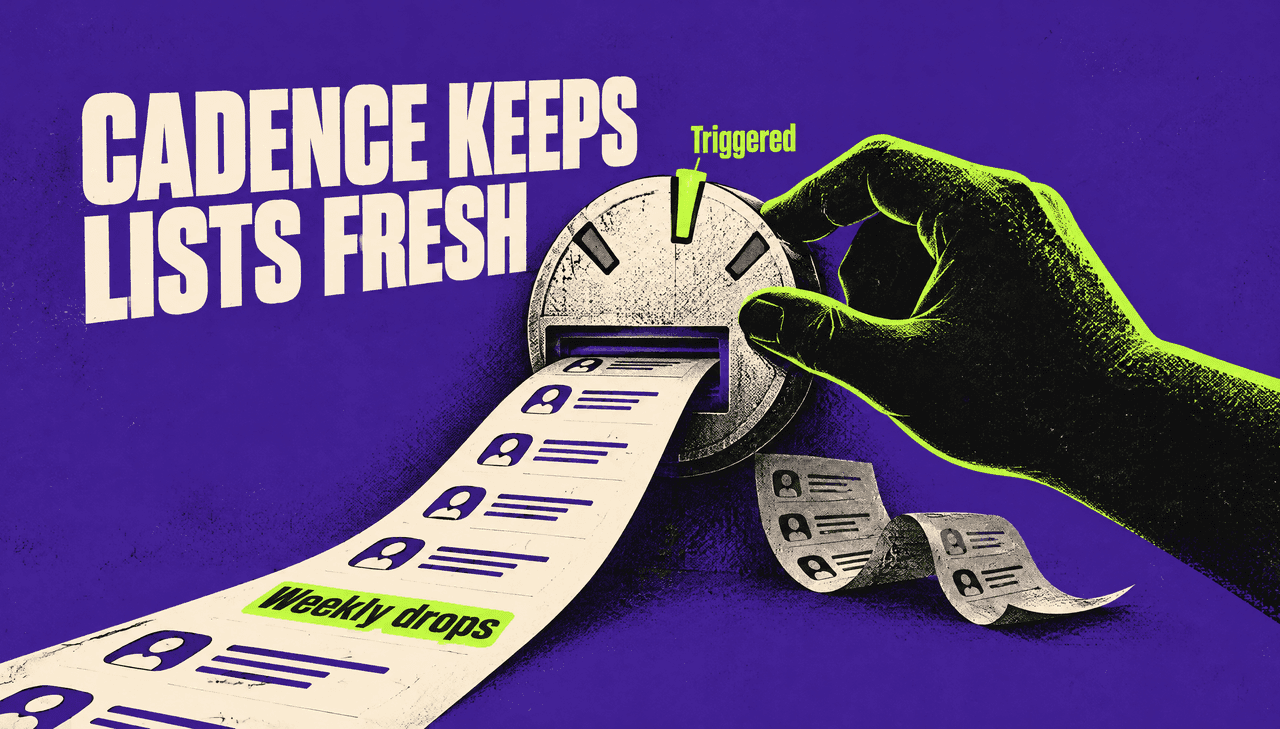
One-time list delivery is a tactical solution. Recurring list delivery is an operational system. Agencies that deliver lists once per client miss the opportunity to build sustainable campaign pipelines and recurring revenue relationships. A structured delivery cadence keeps campaigns fed with fresh contacts and gives the client confidence that their outreach never runs out of qualified targets.
Delivery Cadence by Client Tier
The delivery frequency is calibrated to the client's campaign phase and campaign intensity:
| Campaign Phase | Delivery Frequency | List Volume | Notes |
|---|---|---|---|
| Onboarding / Initial Campaign Launch | One-time delivery | Full ICP list (1,000-10,000 contacts) | Delivered before campaign start. Includes all three ICP tiers. |
| Active Campaign (High Velocity) | Weekly | 500-1,500 net new contacts | Prioritizes Tier 1 and Tier 2 accounts. Replaces churned contacts. |
| Active Campaign (Standard) | Bi-weekly | 300-800 net new contacts | Mix of Tier 2 and Tier 3 accounts. |
| Nurture / Long-Cycle Campaign | Monthly | 500-1,000 contacts | Focuses on Tier 3 and white space expansion accounts. |
| Account Awareness (Top of Funnel) | Monthly | 1,000-3,000 contacts | Broader ICP with lighter personalization requirements. |
Delivery Format Standards
All list deliveries follow a standardized format regardless of client. The format includes three components:
For additional context, see Salesforce guide to B2B lead generation.
- Contact data columns: First name, last name, title, company, email, phone, LinkedIn URL, company domain, city, state, country.
- Metadata columns: Client identifier, ICP tier, contact priority score, last verified date, source platform, data version stamp.
- Delivery manifest: A separate CSV or PDF that summarizes the list delivery, including total record count, tier distribution, freshness statistics, and any anomalies flagged during QA.
The metadata columns serve two purposes. First, they provide the client with context about each record's provenance and quality. Second, they enable the agency to track list performance over time—if a delivery batch has a lower open rate than average, the metadata helps diagnose whether the issue was list quality, subject line effectiveness, or segment misalignment.
Scaling: Running Five or More Client Lists Simultaneously
Managing multiple client lists simultaneously requires operational discipline that goes beyond good tooling. The challenges at scale are workspace management, credential hygiene, batch processing discipline, and status tracking. This section provides the operational playbook for agencies that want to run a five-client-plus operation without creating chaos.
Workspace Isolation
Each client operates in its own data workspace. This is not optional at scale—it is the foundation that makes everything else manageable. Workspace isolation means that the filters, tags, saved queries, and export paths for Client A are completely inaccessible from Client B's workspace. When you build a list for Client A, the query builder shows only Client A's filters. When you export, the default filename and path point to Client A's delivery folder.
At the tooling level, this requires a platform that supports multi-tenant data isolation. Dievio's API supports workspace-scoped operations, allowing you to create, configure, and query separate client environments programmatically.
Credential Management
At scale, you will accumulate API keys, client access credentials, and CRM integrations. These must be managed with the same rigor as client data isolation. Use a credential manager (such as 1Password, HashiCorp Vault, or AWS Secrets Manager) to store all API keys and client-specific credentials. Never store credentials in spreadsheets, email threads, or local files. Every credential rotation event should be logged with the date, the reason, and the operator who performed the rotation.
Batch Processing Order
When running multiple client list builds in parallel, establish a processing order to prevent resource contention and operator confusion. The recommended order is:
- Validate before building: Confirm that each client's ICP is still current and approved before starting any list build.
- Build lowest priority first: Start with the client whose campaign is in the nurture or awareness phase, where timing is most flexible.
- Build highest priority last: End with the client in the most active campaign phase, ensuring their list is fresh when delivered.
- QA each list before moving on: Complete the full QA checklist for each client before starting the next client's build. This prevents mixing of QA notes and reduces the risk of cross-client contamination.
Status Tracking
At five or more clients, you need a lightweight project tracking system to know which lists are in build, which are in QA, which are awaiting client approval, and which have been delivered. A simple shared spreadsheet with columns for Client Name, List Build Status, QA Status, Delivery Date, and Next Scheduled Delivery is sufficient for most agencies.
For agencies that prefer integrated tools, a CRM like HubSpot or a project management tool like Asana can serve the same purpose with the added benefit of automated reminders and deadline tracking.
Common Failure Points and How to Avoid Them
Based on agency feedback patterns, five failure points appear repeatedly across multi-client ABM operations. Each has a specific mitigation that, when implemented as part of the standard workflow, prevents the failure from occurring.
1. ICP Drift
Problem: The client's ICP evolves but the list-building team continues using the original criteria. Lists become progressively misaligned with the client's current priorities.
Mitigation: Schedule quarterly ICP review sessions with each client. During the review, compare the current ICP against recent campaign results. Identify any patterns suggesting the ICP needs narrowing or broadening. Update the ICP document and notify the list-building team immediately when changes are approved.
2. Stale Data Accumulation
Problem: Lists are delivered once and not refreshed. Over time, the data degrades as contacts change roles, companies, or email addresses. Outreach response rates decline.
Mitigation: Enforce the recurring delivery cadence from the start of the engagement. Set automated reminders for delivery dates. If a client declines recurring delivery, deliver a freshness warning with each one-time list that states the expected decay rate and recommends a re-delivery schedule.
3. Untagged Segments
Problem: Contacts are added to lists without proper tier or segment tags. The client cannot distinguish between Tier 1 and Tier 3 outreach, and the agency loses the ability to measure segment-level performance.
Mitigation: Make tagging a mandatory step in the list build process, not an optional cleanup task. If a contact cannot be tagged because its tier is unclear, remove it from the deliverable rather than deliver it without metadata. Invest 5 minutes in proper tagging to save hours of downstream confusion.
4. Delivery Format Inconsistencies
Problem: Each delivery uses a slightly different column order, different field names, or different metadata conventions. The client's CRM integration breaks, and the agency spends time fixing mapping issues instead of building lists.
Mitigation: Lock the delivery format during the onboarding meeting and document it in the client's delivery spec. Use the same format every time. When format changes are necessary (e.g., the client adds a new CRM field), update the delivery spec and notify the client at least one delivery cycle in advance.
5. Credit Over-Consumption
Problem: Multiple operators working in the same data platform consume credits in parallel without coordinating. The agency's credit budget is depleted faster than expected, and list-building operations halt mid-campaign.
Mitigation: Implement a credit tracking spreadsheet that logs credit consumption per client per week. Set soft caps per client and hard caps at the agency level. Use platforms like Dievio that provide real-time credit balance visibility so operators can check availability before running queries.
Tools and Tech Stack Recommendations
The recommended tech stack for multi-client ABM list operations is intentionally lean. Agencies should not need five tools to run this workflow. The core stack consists of three components: a data platform, a delivery mechanism, and a tracking system.
Primary Data Source: Dievio
Dievio serves as the primary data platform for search, enrichment, and programmatic list generation. The platform's API supports workspace-scoped operations, enabling automated multi-client isolation. Key capabilities used in this workflow include:
- Workspace management: Create and configure separate client workspaces via API.
- Advanced filtering: Apply firmographic, technographic, and seniority-based filters within each workspace.
- Bulk export: Generate CSV exports with standardized column naming and metadata inclusion.
- API access: Integrate list building into automated workflows via the Dievio API.
- Credit tracking: Monitor credit consumption per workspace in real time.
For agencies evaluating data platforms for multi-client operations, comparing feature sets and pricing structures helps identify the right fit. See the Apollo alternative for agency list building for a detailed comparison of platform capabilities relevant to agency workflows.
Delivery and CRM Integration
Lists are delivered to the client's CRM or outreach platform via CSV export or API integration. The delivery method depends on the client's infrastructure:
- CSV delivery: Standard format CSV emailed or uploaded to the client's shared drive. Works for all clients regardless of their technical sophistication.
- CRM direct sync: API-based integration with the client's CRM (Salesforce, HubSpot, Pipedrive). Requires the client's API credentials and a configured field mapping. More complex to set up but eliminates manual import steps.
- Enrichment API: For clients that want real-time enrichment rather than batch delivery, the Contact Enrichment API can be integrated directly into the client's CRM to update records on demand.
Optional Enrichment Layers
For agencies that need additional data points beyond what the primary platform provides, enrichment layers can be added selectively:
- LinkedIn profile enrichment: Use the LinkedIn Lookup tool to enrich contact records with verified LinkedIn profile URLs and additional professional metadata.
- Intent data enrichment: For Tier 1 accounts, consider adding intent signal data from third-party providers to prioritize accounts showing active research behavior.
- Technographic data: For clients whose ICP includes technology adoption criteria, technographic enrichment adds a layer of specificity that firmographic data alone cannot provide.
The principle is to add enrichment only where it directly improves outreach outcomes. Every additional tool in the stack adds operational complexity and cost. If an enrichment layer cannot be tied to a measurable improvement in campaign performance, it is not worth the overhead.
Conclusion: The Recurring Workflow Loop
The workflow described in this article is a closed loop that runs continuously throughout a client engagement. It begins with ICP validation, moves through segmentation and list building, passes through a four-stage QA gate, and delivers the finished list via a calibrated cadence. After delivery, performance data flows back into the ICP validation phase, and the cycle repeats.
The agencies that run this workflow most successfully share three characteristics. First, they treat ICP validation as a living document, not a one-time deliverable. Second, they enforce the QA checklist without exceptions, because they know that a single quality failure damages the client relationship more than the time saved by skipping a checkpoint. Third, they automate the recurring delivery cadence from the start, so that list operations become a reliable pipeline service rather than a reactive request-response process.
For agencies building client prospect lists at scale, the parallel process for bulk list construction feeds directly into this workflow. See Agency Lead List Segmentation: Build Isolated Client ICPs for deeper coverage of the segmentation architecture that prevents cross-client contamination.
Explore Agency Lead Lists to see how Dievio supports multi-client ABM operations with isolated workspaces, automated delivery, and real-time credit tracking.
Related workflow: Client ICP Validation Workflow for Lead Generation Agencies.
Related workflow: Recurring Lead List Delivery Workflow for Agencies.
Build Your First Outbound List to validate the segment before you commit to full outreach.