Dievio
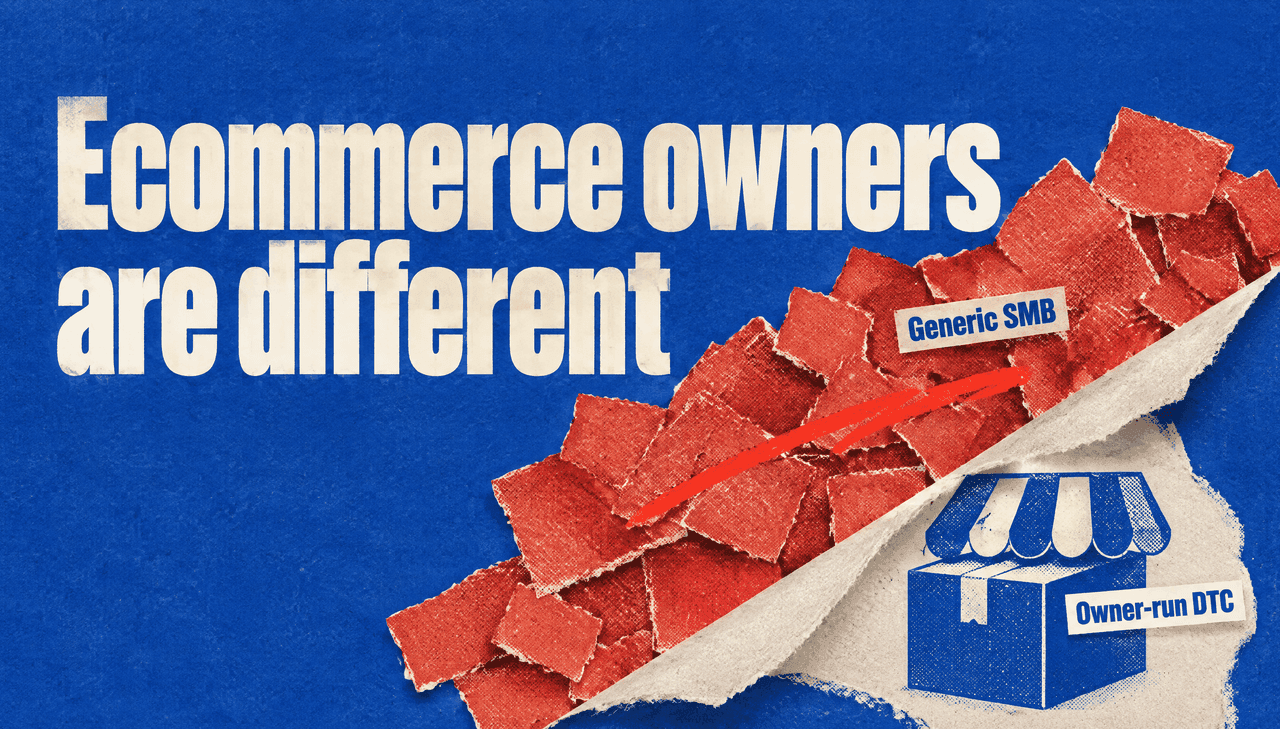
Most "business owner" lists are built for the wrong buyer. They pull every registered company with a founder or owner title, drop them into one segment, and hand sales a file where a Shopify Plus brand doing $18M a year sits next to a two-person landscaping LLC. The response rates reflect that. Ecommerce and DTC owners do not buy like local service owners, and they do not buy like professional services partners. They live inside a specific stack, they measure different numbers, and they usually decide alone or with one co-founder.
This guide is about treating owner-run online retailers as their own segment inside the broader business owner email list market. The goal is a repeatable filter workflow: define the profile, cut on platform and channel signals, separate bootstrapped founders from VC-backed operators, preview the segment before you spend credits, and export a list you can actually run a campaign against.
Why ecommerce and DTC owners are a distinct segment
A generic SMB list assumes the owner is a generalist. That is true for a dental practice or an HVAC company. It is not true for an ecommerce founder. A DTC owner at $3M revenue typically knows their blended CAC, their repeat purchase rate, their contribution margin after shipping, and which SKU carries the catalog. They have opinions about Klaviyo flows, Meta creative testing, and 3PL SLAs. They are, in practice, a hybrid of operator and growth marketer.
That changes three things about how you prospect them:
- Buying triggers are channel-driven. A bad Q4, a rising CAC, a new marketplace expansion, or a funding round are the events that create urgency. Headcount growth is a lagging signal, not a leading one.
- Decision speed is fast but attention is scarce. There is no procurement committee. There is one person reading email on a phone between warehouse calls. If the first two lines do not name a problem they already have, you are deleted.
- Tool fit is stack-dependent. A brand on Shopify Plus with Recharge and Gorgias has different integration requirements than a WooCommerce seller doing wholesale. Same "ecommerce owner" label, completely different pitch.
Salesforce's guidance on B2B lead generation makes the same point in a different vocabulary: segmentation quality determines everything downstream. If your ICP definition is loose, your messaging, your sequencing, and your scoring all inherit that looseness. Ecommerce owners are a case where the definition has to be tighter than the category name suggests.
Defining the owner-run ecommerce profile
Before touching filters, write down what "owner-run" actually means for your offer. The table below is the working definition most outbound teams land on. Treat it as a starting template and adjust the bands to your price point.
| Signal | Why it matters | How to detect it |
|---|---|---|
| Company size band | Determines budget ceiling and whether the owner still touches day-to-day ops | Headcount filter plus revenue band; cross-check against LinkedIn company size |
| Headcount (1–10, 11–50, 51–200) | Under 50, the founder is usually still in the buying loop. Over 200, a functional leader owns the decision | LinkedIn company size, job posting volume, "team" page depth |
| Single founder vs co-founder pair | Co-founder teams split commercial and product/ops ownership — you need to know which one you are writing to | About page, LinkedIn "people also viewed," press coverage, founder interviews |
| Registered entity vs DBA | An LLC or Inc with a real domain signals a business that invoices and pays for software | Domain age, business registry lookup, presence of a real careers or contact page |
| Presence of a "team" or "about" page | Brands that publish team pages are usually past the solo-operator stage and have a marketing function | Manual spot check on a sample of 20 records before you scale |
| Owner title normalization | "Founder," "Co-Founder," "Owner," "CEO," and "Managing Director" all map to the same buyer | Title filters with synonym sets, not a single exact-match string |
The most common mistake here is over-tightening on title. A DTC founder who has scaled past $5M often changes their LinkedIn title to "CEO" and stops calling themselves a founder. If your filter only matches "Founder," you lose the best half of the segment. Build the title set once, save it, and reuse it.
Platform and tech-stack signals for segmentation
Platform is the cleanest first cut because it is binary, verifiable, and directly correlated with the rest of the stack. A brand on Shopify Plus is almost always running a paid acquisition program, an email platform, a reviews tool, and at least one post-purchase app. A brand on a generic website builder with a checkout plugin may be doing $200K a year with no marketing budget at all.
For additional context, see HubSpot on sales prospecting.
Useful platform and stack signals to filter on:
- Storefront platform: Shopify, Shopify Plus, BigCommerce, WooCommerce, Magento, Wix, Squarespace Commerce.
- Marketplace presence: Amazon Seller Central, Etsy, TikTok Shop, Walmart Marketplace, eBay.
- Retention and lifecycle tooling: Klaviyo, Attentive, Postscript, Yotpo, LoyaltyLion.
- Operations and post-purchase: Gorgias, Zendesk, Recharge, Loop Returns, ShipBob, ShipStation.
- Analytics and attribution: Triple Whale, Northbeam, GA4 with ecommerce events.
Two or three of these installed together is a much stronger signal than any one alone. A brand running Shopify Plus plus Klaviyo plus a returns platform is spending real money on retention — which means they have a budget line you can attach to. A brand running only WooCommerce with no lifecycle tooling is a different conversation entirely, often a founder who is still doing everything manually and may not be ready to buy.
In Dievio lead search, tech-installed filters combine with company and role filters in the same query, so you can build "Shopify Plus + 11–50 employees + Founder/CEO title" as one segment rather than stitching three exports together.
Channel mix, SKU volume, and revenue band filters
Platform tells you what they run. Channel mix tells you how they think. A DTC-only brand obsesses over first-party data, email list growth, and creative volume. An Amazon-heavy seller obsesses over listing rank, buy box share, and ad spend inside Seller Central. A wholesale-mixed brand worries about line sheets, trade show follow-up, and net terms. Same industry label, three different pitches.
SKU volume is the underused proxy here. It correlates with catalog complexity, which correlates with how much operational software a brand needs:
| SKU band | Typical profile | What they buy |
|---|---|---|
| 1–10 | Single-hero-product brand, often founder-led, heavy paid social | Creative tools, email/SMS, subscription apps |
| 11–50 | Growing catalog, first ops hire, marketplace expansion starting | Inventory planning, 3PL integrations, CX tooling |
| 51–250 | Multi-category, wholesale conversations, real merchandising function | PIM, ERP-lite, returns management, attribution |
| 250+ | Established brand, likely VC-backed or PE-owned | Enterprise-grade integrations, data warehouse, agency retainers |
Revenue band maps to budget more directly than headcount does. Rough working assumptions for outbound planning:
- Under $500K: founder does everything, buys point tools under a few hundred dollars a month, responds to ROI-in-30-days framing.
- $500K–$2M: first real hires, first agency relationships, budget exists but is scrutinized personally by the owner.
- $2M–$10M: the sweet spot for most B2B ecommerce tooling. Owner still signs, but a marketing or ops lead influences.
- $10M–$50M: functional leadership exists. Owner is a sponsor, not the evaluator.
- $50M+: committee buying, procurement, security review. Different motion entirely.
Before exporting any of these bands, size them. Preview lead counts lets you see how many records match a filter combination before you commit credits. A "$2M–$10M Shopify Plus founder" segment might return 4,000 records or 90 — and you want to know which before you build a sequence around it.
Founder-led vs VC-backed DTC: how to tell and why it matters
This is the split most teams skip, and it is the one that most changes your messaging.
For additional context, see Salesforce guide to B2B lead generation.
Bootstrapped or owner-funded brands are run by someone whose personal capital is on the line. They respond to speed, payback period, and "this replaces a manual process." They are allergic to enterprise language and long implementation timelines. They will ask what it costs in the first reply.
VC-backed brands are run by a founder who reports to a board and is measured on growth rate and efficiency ratio. They respond to scale, integration depth, and whether the tool helps them hit a number they already committed to. They have a Head of Growth or VP Marketing who will run the evaluation.
Signals that separate the two:
- Funding announcements, Crunchbase-style round data, or a press page with "Series A" language.
- Presence of a "Head of Growth," "VP Marketing," or "Director of Retention" title on LinkedIn.
- Headcount growth rate over the last 12 months — fast growth usually means outside capital.
- Job postings for roles a bootstrapped brand would never hire first (brand manager, lifecycle marketing manager, data analyst).
- Retail or wholesale partnerships with national chains, which usually follow institutional funding.
If you sell to founder-led brands, build the segment around owner and founder titles — the founder email list page covers the title sets and stage filters for that. If you sell to funded brands, you want the founder as a sponsor and the functional lead as the evaluator, which means multi-threading from the first touch.
Filter workflow: building the list end to end
Here is the sequence that holds up in practice. It is deliberately ordered so that each step narrows the next.
- Write the ICP in one sentence. Example: "Owner or co-founder at a Shopify-based DTC brand doing $2M–$10M, 11–50 employees, US or UK, running Klaviyo." If you cannot write it in one sentence, you are not ready to filter.
- Apply the platform filter first. Shopify, Shopify Plus, BigCommerce, or WooCommerce. This is the highest-signal, lowest-ambiguity cut.
- Narrow by headcount and revenue band. Use both. Headcount alone catches agencies and holding companies; revenue alone catches brands with inflated GMV and no margin.
- Add the tech-stack overlay. Klaviyo, Gorgias, Recharge, or whatever your integration requires. This removes brands that would fail technical qualification anyway.
- Exclude the wrong owner type. If you are selling to bootstrapped brands, exclude records with a VP Marketing or Head of Growth present — those are funded and will route you to a committee.
- Preview the count. Check the segment size before export. If it is under a few hundred, widen one band rather than exporting a thin list.
- Export and enrich. Pull verified emails and, where relevant, phone numbers. Normalize titles on import so your CRM reporting stays clean.
- Save the query. If this is a recurring motion, rebuild it as a scheduled job rather than a manual export each month.
Steps 1 through 5 take twenty minutes once you have done them a few times. The teams that struggle are usually the ones skipping step 1 and trying to filter their way into a definition.
Outreach messaging for ecommerce owners
Ecommerce owners read email on mobile, in fragments, between operational tasks. HubSpot's prospecting guidance is blunt about what that means: relevance beats volume, and the first line has to earn the second. For this segment specifically:
- Subject lines under six words. "Shopify returns process" outperforms "Quick question about your ecommerce operations strategy."
- One value proposition per email. Not three. Owners skim and will only retain the first claim.
- Name the stack. "Saw you're on Shopify Plus with Klaviyo" proves you did the work and filters out the wrong-fit replies.
- Lead with a number. Hours saved, cost per order reduced, repeat rate lifted. Vague benefit language reads as agency spam.
- No enterprise vocabulary. "Solution," "leverage," "synergy," and "platform play" all signal a long sales cycle they do not want.
- One clear ask. A 15-minute call, or a one-line reply. Not both.
Cadence-wise, three to four touches over two weeks works better than a long drip. If they are interested, they reply fast. If they are not, more touches will not change it — and this segment is small enough that burning goodwill across a niche is expensive.
For additional context, see LinkedIn Sales Solutions on lead scoring.
Multi-threading: pairing owners with operations and marketing
A single contact at a 20-person brand is a fragile pipeline. Owners go on holiday, get buried in Q4, or simply forward your email to someone and forget about it. Multi-threading is not about volume — it is about coverage.
For owner-run ecommerce brands, the two roles worth adding are:
- Operations or fulfillment lead. Owns 3PL relationships, inventory, and CX tooling. Relevant if your product touches order management, shipping, or support. The operations manager email list page covers the sub-function breakdown.
- Marketing or growth lead. Owns paid, email, and retention. Relevant if you sell acquisition, lifecycle, or analytics tooling.
Sequence the owner first with a business-level message, then the functional lead a few days later with a problem-level message. Keep the two threads distinct — do not CC them, and do not send the same copy. If you are building this out systematically across accounts, the decision maker email list hub covers the broader coverage model for owner-plus-leadership outreach.
Data quality checks before you export
Ecommerce brands churn domains more than most SMB categories — rebrands, migrations from a legacy domain, and marketplace-only sellers with no real website all create noise. Run these checks on a sample before you scale:
- Domain match. Does the email domain match the company website? Mismatches usually mean an agency, a holding company, or a stale record.
- Title normalization. Map Founder, Co-Founder, Owner, CEO, and Managing Director into one buyer type so reporting is consistent.
- Catch-all and role-based domains. Flag catch-all domains separately — they deliver but bounce unpredictably. Avoid
info@andsupport@entirely for owner outreach. - Personal vs role email. Owner outreach should go to a named person. A generic inbox will not reach the decision maker.
- Freshness. Check the last-verified date. A record verified six months ago at a fast-moving DTC brand may already be dead.
- Duplicate detection. Multi-brand operators often appear under several domains. Dedupe on person, not just company.
LinkedIn's material on lead scoring is useful framing here: a score is only as good as the data feeding it, and stale or mismatched fields quietly corrupt every downstream decision. Validate before you buy, not after your first campaign underperforms.
Common pitfalls and how to avoid them
- Over-broad segments. "Ecommerce companies, 1–500 employees" is not a segment. It is a category. Narrow until the count is uncomfortable.
- Mistaking Amazon resellers for DTC founders. A reseller flipping other brands' products has no brand budget, no retention program, and no interest in your lifecycle tooling.
- Ignoring international sellers. A UK or Australian DTC brand may be a great fit, but timezone, VAT, and shipping complexity change the pitch. Segment by region explicitly.
- Treating agency-side ecommerce operators as brand owners. An agency founder running Shopify builds for clients is a different buyer with a different budget. Keep them in a separate list.
- Filtering on title alone. Title without platform and revenue context produces a list of people who happen to have the word "Founder" on their profile.
- Exporting before previewing. The single most common way teams waste credits on this segment.
Putting it together: a repeatable ecommerce owner prospecting motion
The workflow that works is boring and repeatable. Define the owner-run ecommerce profile once. Cut on platform first, then revenue and headcount, then tech stack. Decide whether you are selling to bootstrapped founders or funded operators, and exclude the other. Preview the count, export, enrich, and normalize titles on import. Thread the owner with one functional lead. Run a short cadence with stack-specific, number-led copy.
Do that and you stop competing on list size and start competing on segment precision — which is the only durable advantage in outbound to a niche this small. If you want the full title sets, stage filters, and vertical breakdowns for owner-operated businesses across categories, start with the business owner email list page and branch into the ecommerce-specific filters from there. Teams running this as a monthly or quarterly motion rather than a one-off export should look at the lead generation API so the segment refreshes on a schedule instead of by hand.