Dievio
<!DOCTYPE html>
Outbound Cadence Optimization: Build Sequences That Get Responses | Dievio
How to Build a Sustainable Outbound Cadence That Prospects Actually Respond To
In the world of B2B sales, the most common failure point isn't the product, the pitch, or the closing technique. It is the cadence. Most outbound teams operate on a "spray and pray" model, firing off hundreds of emails in a week with no regard for the prospect's inbox or their buying journey. The result? Low reply rates, high unsubscribe numbers, and a team that burns out chasing ghosts.
Building a sustainable outbound cadence requires a fundamental shift in mindset. You must move from optimizing for volume to optimizing for engagement. A successful sequence is not just a list of emails; it is a structured interaction designed to guide a prospect from awareness to a conversation without overwhelming them. This guide walks through the architecture of a high-performing outreach sequence, covering channel mix, timing, personalization, and the metrics that actually matter for lean B2B teams.
For operators running lean outbound motion, the goal is efficiency without sacrificing quality. You need a system that respects the prospect's time while maximizing your team's output. By aligning your cadence with the buyer's journey rather than your internal sales process, you create a sustainable motion that yields responses and, eventually, revenue.
Cadence Fundamentals: What It Is and What It Isn't
Before diving into the mechanics, it is crucial to define what an outbound cadence actually is. In simple terms, a cadence is the structured timeline of touchpoints you send to a prospect over a specific period. However, it is often misunderstood as just an email sequence. A true cadence encompasses the entire multi-channel workflow, including email, LinkedIn, phone, and even SMS, depending on the channel strategy.
According to industry standards like those outlined in the HubSpot guide on sales prospecting, a cadence must have a clear beginning, middle, and end. It cannot be infinite. It must have exit conditions. If a prospect does not respond after a certain number of touches, the cadence should pause or move to a different tier. This prevents your team from wasting time on cold leads and allows them to focus on warm prospects.
The core components of a robust cadence include:
- Channel Mix: Which channels are used and in what order?
- Touch Frequency: How often do you reach out?
- Message Themes: What value is delivered in each touch?
- Exit Conditions: When do you stop or escalate?
Many teams fail because they treat the cadence as a static template. Instead, it should be dynamic, adapting to the prospect's behavior. If a prospect engages with an email but ignores a LinkedIn message, the cadence should reflect that shift in interest.
ICP Before Cadence: The Foundation of List Quality
You cannot build a successful cadence on a bad foundation. The most common mistake outbound teams make is designing a perfect sequence and then feeding it with poor data. If your list quality is low, your cadence will fail regardless of how well you write the copy. This is why ICP (Ideal Customer Profile) segmentation must come before cadence design.
Before you write a single line of copy, you need to ensure your list is accurate and relevant. A prospect who is not a good fit for your solution will never respond, no matter how many times you reach out. This leads to "cadence fatigue" where prospects unsubscribe or mark you as spam because they feel targeted by irrelevant noise.
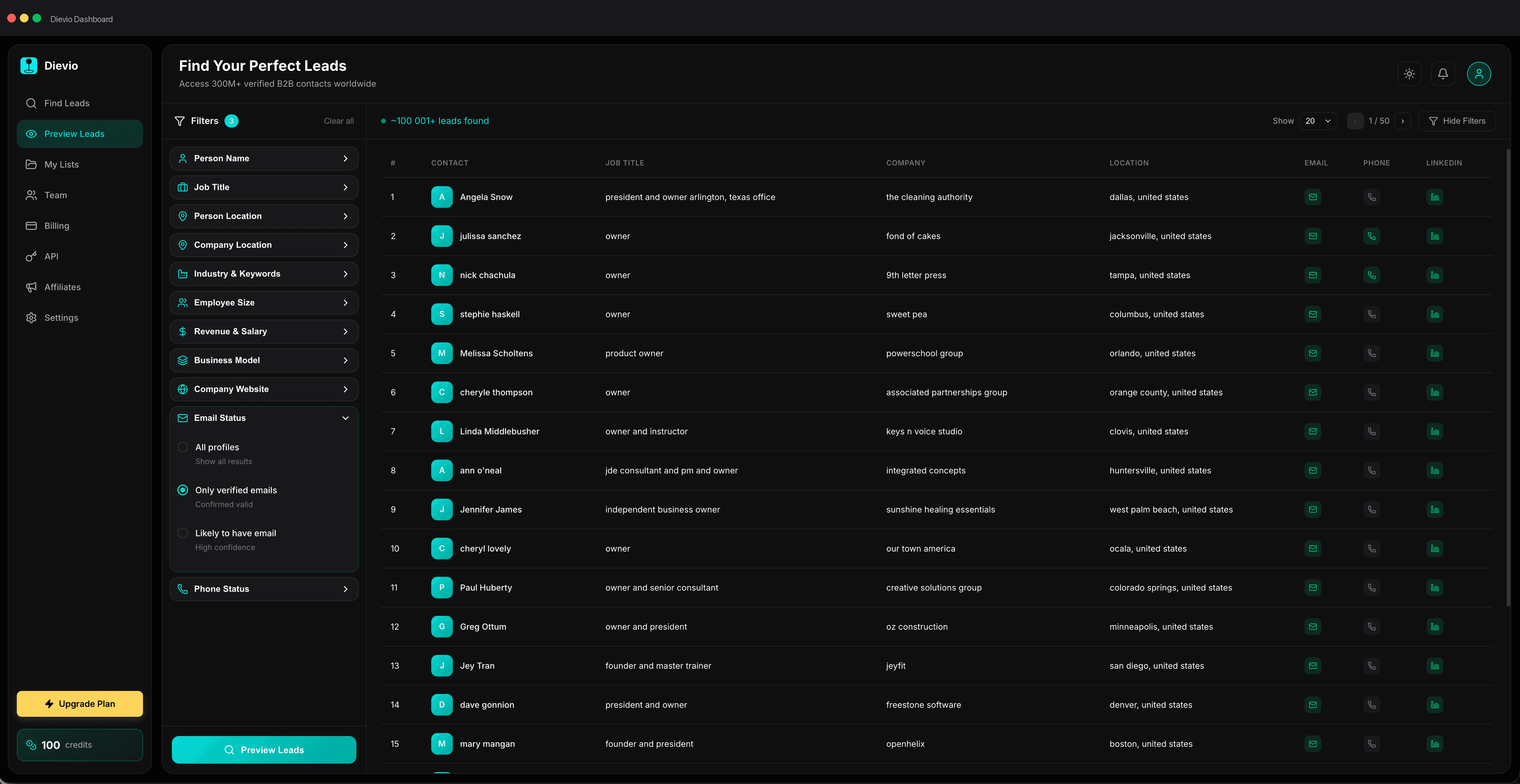
For lean teams, the focus should be on precision over quantity. As discussed in our guide on building B2B lead lists that convert before the first email, the quality of your data directly impacts your deliverability and response rates. If you are using a tool like Dievio to find leads, ensure you are filtering for roles, industries, and company sizes that align with your ICP.
Think of your cadence as a filter. The first layer of the filter is your list quality. If the data is stale or inaccurate, the cadence will bounce. If the data is accurate but the prospect is not a fit, the cadence will be ignored. Only when the data is high quality and the fit is strong does the cadence have the potential to convert.
Channel Selection Logic: Multi-Channel vs. Single-Channel
Single-channel outreach, particularly email-only, is increasingly ineffective. Prospects are inundated with emails, and inboxes are often treated as a trash bin. Multi-channel sequences outperform single-channel email by 3–5x in reply rate. However, adding channels requires a logical strategy, not just random addition.
The choice of channel depends on the ICP, the role seniority, and the buying stage. For example, a C-level executive might respond to a LinkedIn message but ignore a phone call. A mid-level manager might be more responsive to a direct email. Understanding these nuances is key to channel selection logic.
Here is a breakdown of when to use each channel based on common best practices:
| Channel | Best For | Frequency Limit |
|---|---|---|
| Deep dives, documentation, detailed value props. | 3–5 touches per week. | |
| Social proof, connection building, lightweight engagement. | 1–2 touches per week. | |
| Phone | High intent, urgent needs, C-level decision makers. | 1–2 touches per week. |
| SMS | Reminders, quick updates, high urgency. | 1 touch per week max. |
As detailed in our article on multi-channel outbound sequencing, the key is synchronization. If you send an email on Tuesday, do not send a LinkedIn message on Wednesday. Space them out to avoid looking like a bot. The goal is to create a rhythm that feels human and considerate of the prospect's workflow.
Timing and Frequency: The Art of the Pause
Timing is often overlooked in favor of message content. However, when you send a message is just as important as what you say. Sending an email at 9 AM on a Monday might get lost in the morning rush. Sending a LinkedIn message on a Friday afternoon might get ignored until Monday.
The optimal touch frequency for most B2B cadences is 3–7 touches over a 2–3 week period. This is enough to stay top-of-mind without becoming annoying. However, timing windows shift by ICP. A startup founder might check their phone constantly, while a VP of Engineering might only check email during specific windows.
To validate timing, you should look at your own data. If you notice higher reply rates on Tuesdays, adjust your schedule. But be careful not to over-optimize. The goal is to send at a time that is convenient for the prospect, not just convenient for your team. Avoid spam complaints by respecting opt-in preferences and ensuring your frequency does not exceed industry standards.
Consider the "pause" strategy. If a prospect does not respond to an email, wait a few days before following up. This gives them time to process the information and reduces the likelihood of them feeling pressured. A common cadence structure is: Day 1 (Email), Day 4 (LinkedIn), Day 7 (Email), Day 10 (Phone), Day 14 (Email). This spacing allows for natural digestion of the message.
Personalization at Scale: Density Over Volume
Personalization is the holy grail of outbound, but it is often misunderstood. Many teams think personalization means inserting the prospect's first name into the first line of every email. This is superficial and easily detected by savvy prospects. True personalization is about relevance.
Personalization density matters more than the volume of touches. A message that mentions a specific recent company milestone, a shared connection, or a specific pain point they are facing will outperform a generic template 50 times over. This is where dynamic fields and trigger-based messaging come into play.
For example, if a prospect's company recently raised funding, your cadence should reflect that. You might mention how their growth phase aligns with your solution. If they recently posted on LinkedIn about a challenge, reference that post. This shows you are not just blasting a template; you are engaging with their reality.
For additional context, see Salesforce guide to B2B lead generation.
To achieve this at scale, you need tools that allow for dynamic content insertion. This ensures that every message feels tailored without requiring hours of manual work. The goal is to make the prospect feel understood, not targeted.
Message Themes and Angles: Rotating Value
One of the biggest mistakes in cadence design is repeating the same message in every touch. If you send the same pitch five times, the prospect will tune it out. You need to rotate value propositions, pain points, and social proof across touches without repeating yourself.
Here is a framework for rotating message angles across a 5-touch sequence:
| Touch | Theme | Goal |
|---|---|---|
| 1 | Problem Awareness | Introduce the pain point. |
| 2 | Solution Fit | Show how you solve it. |
| 3 | Social Proof | Show others who succeeded. |
| 4 | Risk Reversal | Remove objections. |
| 5 | Final Call to Action | Close the loop. |
This structure ensures that each touch adds new value rather than restating the same point. It keeps the prospect engaged and moves them closer to a decision. By the fifth touch, you have covered all the bases, making it easy for them to say yes or no.
Prioritization and Scoring: Not All Prospects Are Equal
Not all prospects should enter the same cadence. Some leads are "hot" and need immediate attention, while others are "cold" and might need a different approach. Using lead scoring models allows you to tier your outreach based on intent and fit.
As outlined in our guide on B2B lead scoring models that actually prioritize outbound pipelines, you can assign points based on company size, role, and engagement signals. High-scoring leads get a faster, more aggressive cadence. Low-scoring leads get a slower, nurturing cadence.
This tiering approach ensures that your best resources are spent on the most promising opportunities. It also prevents your team from wasting time on leads that are unlikely to convert. By scoring leads before they enter the cadence, you create a more efficient workflow that aligns with your sales capacity.
Cadence Health Metrics: What to Track
How do you know if your cadence is working? The answer lies in the metrics you track. Many teams focus on vanity metrics like "emails sent" or "list size." These do not tell you if you are generating revenue or engagement.
The key metrics for cadence health include:
- Reply Rate: The percentage of prospects who respond to your outreach.
- Response Quality: Are they asking questions, or just saying "thanks"? High quality means a conversation is starting.
- Meeting Conversion: How many replies turn into booked meetings?
- Unsubscribe Rate: A high rate indicates your frequency or content is too aggressive.
Tracking these metrics allows you to iterate on your cadence. If your reply rate is low, check your subject lines and personalization. If your meeting conversion is low, check your call to action and value prop. As detailed in our outbound reply rate optimization playbook, continuous measurement is the only way to improve performance.
Remember, volume does not equal success. A cadence that sends 1,000 emails and gets 0 replies is a failure. A cadence that sends 100 emails and gets 10 replies is a success. Focus on the quality of the interaction, not the quantity of the output.
Testing and Optimization: The Iterative Process
Once your cadence is live, it is not set in stone. You need to test and optimize continuously. A/B testing is the standard method for this. You can test subject lines, send times, message angles, and even channel combinations.
For example, test a subject line that focuses on a benefit versus one that focuses on a question. Test sending on Tuesday morning versus Thursday afternoon. The goal is to find the combination that yields the highest reply rate for your specific audience.
When running tests, ensure you have enough sample size to be statistically significant. If you only test on 10 prospects, the results might be noise. Aim for at least 50–100 prospects per variant to draw meaningful conclusions. Once you find a winner, implement it across the board and look for the next variable to test.
Data Hygiene and Cadence Decay
Finally, you must address the issue of data decay. Over time, contact information becomes stale. Emails bounce, phone numbers change, and LinkedIn profiles update. If you run a cadence on outdated data, your deliverability will suffer, and your reputation will be damaged.
Regular list hygiene is essential. This involves refreshing your data, removing bounced emails, and verifying contact details. As we discussed in our article on CRM data hygiene for outbound teams, keeping your pipeline clean between campaigns is critical for long-term success.
Additionally, consider the timing of your cadence. If you launch a campaign in January, the data might be stale by March. Refresh your cadence periodically to ensure you are reaching the right people. This also helps maintain your domain reputation with email providers, ensuring your messages land in the inbox rather than the spam folder.
Conclusion: Building a Sustainable Motion
Building a sustainable outbound cadence is about balance. It is about balancing volume with quality, frequency with relevance, and automation with personalization. By following the principles outlined in this guide, you can create a sequence that prospects actually engage with, rather than ignoring or deleting.
Start by defining your ICP and ensuring your list quality is high. Then, design a multi-channel cadence that respects the prospect's time and attention. Use data to measure your success and iterate continuously. Remember, the goal is not just to send emails, but to start conversations that lead to revenue.
If you are ready to build a high-quality prospect list that supports your cadence strategy, use Dievio to find and verify your leads. Our platform provides the data hygiene and enrichment you need to ensure your outreach is effective. Build Your Prospect List today and start optimizing your outbound motion.
For more insights on improving your B2B sales process, explore our other resources on reply rate optimization and multi-channel sequencing.