Dievio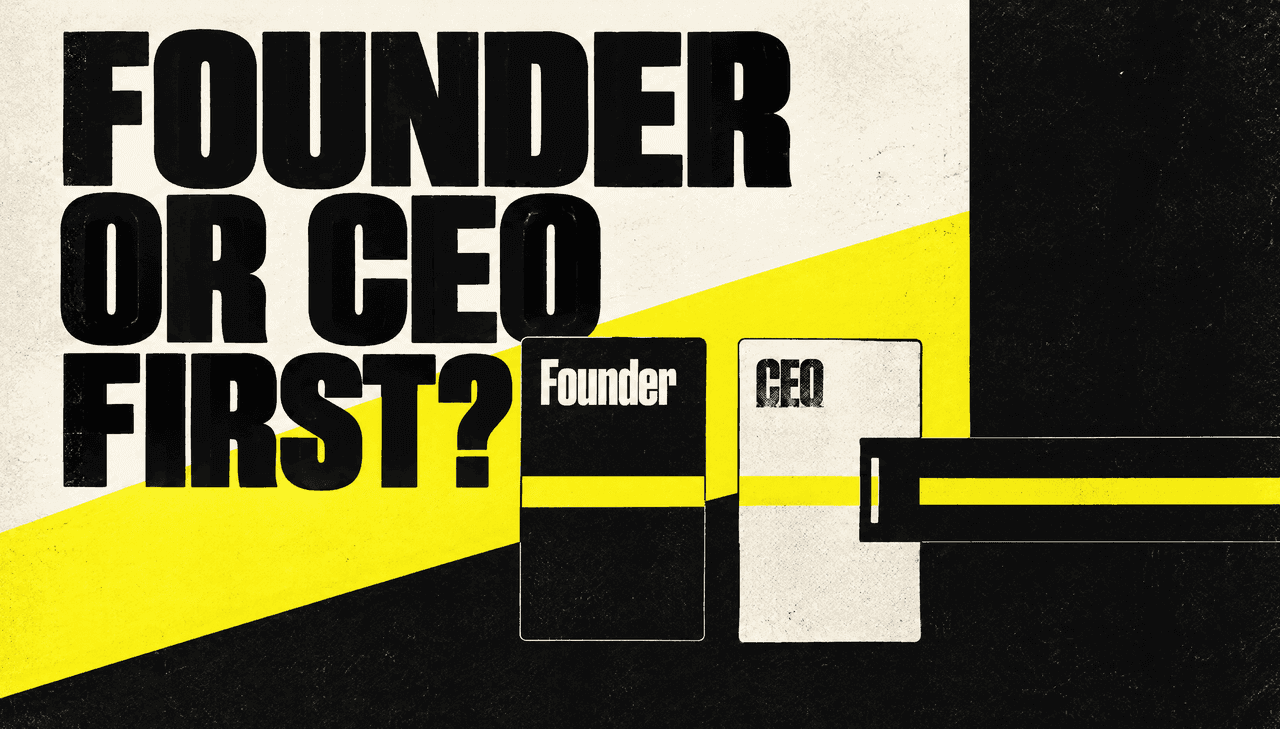
Why founder vs CEO is a real targeting question
Two companies. Same headcount band, same industry, same revenue range. You pull an executive list, filter by title, and export the CEO row for both. One of those emails lands in the inbox of the person who signs the contract. The other lands in the inbox of someone who forwards it to a VP with a one-line note and never thinks about it again.
That gap is the entire reason founder vs CEO email search is a targeting decision and not a naming preference. The title on the record tells you what someone is called. It does not tell you who owns the budget, who can kill a deal, or who will actually reply to a cold email at 7:40am on a Tuesday.
Most outbound teams treat "CEO" as the universal top-of-funnel contact and "founder" as a startup-flavored variant of the same thing. In practice, the two roles sit at different points in the decision chain depending on company stage, ownership structure, and how the business actually sells. Getting this wrong costs you the first meeting, not just the reply rate.
This guide maps the choice to something you can act on: which role to search for, which filters to apply in a lead tool, and how to sequence outreach once you have the contact. If you want the short version — founder-led companies usually route to the founder, installed-CEO companies usually route through a champion — but the interesting part is knowing which one you are looking at before you spend a credit.
What each title usually means in B2B data
Before you build filters, get precise about the labels. Lead databases are messy at the executive level because titles are self-assigned, inconsistently formatted, and often duplicated across a single person record.
- Founder — the person who started the company. May or may not still be employed there. May hold no operational title at all, or hold three.
- Co-founder — same authority in most early-stage companies, different functional lane (product, technical, commercial). Frequently the actual buyer for tooling in their lane.
- CEO — the top operating executive. At a founder-led company this is often the founder. At a later-stage company it is usually a hired operator with a board to answer to.
- Managing Director / Owner / Principal — regional variants that carry founder-equivalent authority in agencies, professional services, and owner-operated businesses.
The conflation problem is real: a single person can appear as "Founder & CEO," "Co-Founder / CEO," "CEO, Founder," or "Founder" in three different records across three different sources. If your role filter is a single keyword match, you will miss a meaningful share of the people you actually want.
That is why role-based search should be treated as a keyword set, not a keyword. Searching for founder contacts means searching founder, co-founder, cofounder, owner, and managing director — then deduplicating. The same logic applies in reverse when you run a CEO email address search, where you should expect founder-CEOs to appear inside the CEO result set whether you asked for them or not.
Decision authority by company stage
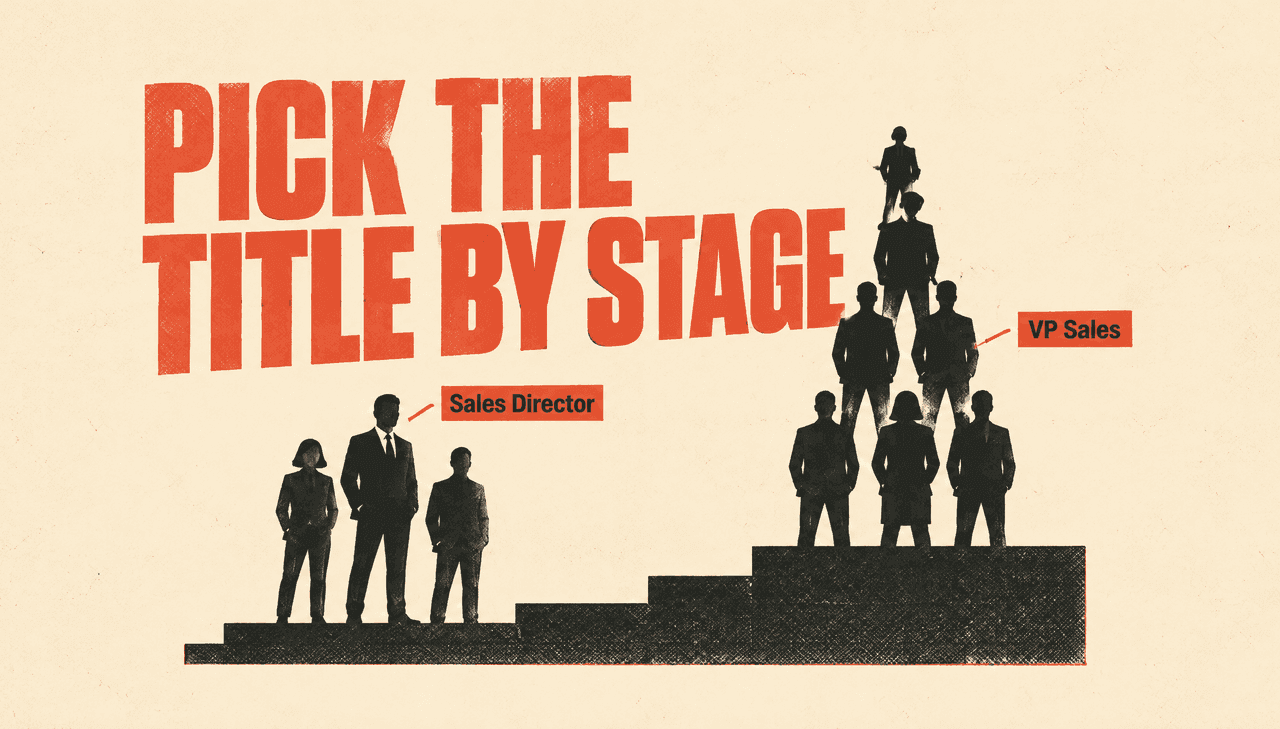
Stage is the strongest single predictor of who owns the first meeting. Not industry, not headcount alone, not funding headline — stage, because it determines whether the founder is still in the room when purchasing decisions get made.
| Company stage | Typical decision holder | Best first contact | Sequencing note |
|---|---|---|---|
| Pre-seed / bootstrapped (<10 people) | Founder, personally | Founder or co-founder | Single-thread. Direct, short, no committee language. |
| Seed (10–30 people) | Founder-CEO, sometimes co-founder by function | Founder-CEO, or functional co-founder | Single-thread with a functional angle if the pain is departmental. |
| Series A (30–100 people) | Founder-CEO plus first functional leaders | Founder-CEO for strategic, VP for tactical | Two-thread: founder for vision, VP for evaluation. |
| Series B–C growth (100–500 people) | Hired CEO or founder-CEO with a leadership layer | VP or Head of function first | Champion-up. Founder/CEO as the escalation, not the opener. |
| Mid-market (500–2,000 people) | Functional executive plus procurement | VP or Director | Multi-thread. CEO is a sponsor, not a buyer. |
| Enterprise (2,000+) | Committee, procurement, business unit owner | Director or VP in the business unit | CEO outreach is a relationship play, not a pipeline play. |
Read that table as a filter instruction, not a hierarchy. The mistake most teams make is treating the CEO row as the highest-value contact at every stage. At 1,500 employees, a cold email to the CEO about your product is usually a slower path to a meeting than a cold email to the person who owns the problem.
Founder-led companies: when founders are the buyer
Founder-led does not mean "small." It means ownership and control still sit with the person who started the business. You can spot it with a few observable signals:
- Headcount under roughly 100, or headcount growing but leadership layer still thin.
- The founder still appears in sales calls, product decisions, or public content.
- Equity is concentrated — no professional CEO installed, no independent board driving hiring.
- The company sells founder-to-founder, which is common in agencies, devtools, and services businesses.
In these companies, the founder email is not a shortcut around the process. It is the process. There is no procurement committee to route through, no VP who needs to be convinced before the founder hears about you, and no risk of your message being forwarded into a void.
Practical implications for search and outreach:
- Filter by role keyword set, not seniority alone. Seniority filters often tag founders as "Owner" or "C-Suite," which splits your list across two buckets.
- Include company size as a hard filter. Under 50 employees is the cleanest founder-led proxy in most datasets.
- Expect dual titles. "Founder & CEO" records should be counted once, in whichever list you are building.
- Write shorter. Founder inboxes at this stage are personal inboxes. Long nurture-style copy reads as noise.
If founder-led outreach is your core motion, a dedicated founder email list built with these filters will outperform a generic executive export every time, because the list itself encodes the assumption that the founder is the buyer.
Professional CEO companies: gatekeeper vs champion
Once a company installs a professional CEO — usually at Series B and beyond, or after an acquisition — the CEO's relationship to cold outreach changes. They are still the most senior person in the building, but they are no longer the person evaluating tools.
At this stage the CEO plays one of three roles in your deal:
- Gatekeeper — your email gets forwarded down with "worth a look?" and dies in a queue.
- Champion — the CEO has a stated priority (cost reduction, a new market, a compliance deadline) and forwards your email with a directive attached. This is the good outcome, and it depends entirely on whether your message matches a priority they have already announced.
- Sponsor — the CEO is aware of the deal and signs off at the end, but never participates in evaluation.
You cannot control which of the three you get, but you can influence the odds. CEO outreach at this stage works when it is tied to a public, dated priority — an earnings call theme, a hiring surge in a specific function, a product launch, a regulatory deadline. Generic value propositions get gatekept. Specific, timely, board-level framing gets championed.
For everything else, the better first contact is the functional owner. That is why teams running executive sequences at scale pair a CEO email list with functional role lists and treat the CEO as the second or third touch rather than the opener. LinkedIn's guidance on mapping stakeholders through the sales process makes the same point from the relationship side: the person who feels the problem is usually not the person with the biggest title.
For a tighter CEO segment at this scale, layering a revenue filter on top of the company-size filter usually sharpens the result — the walkthrough of CEO email search by company revenue shows how to combine those two without double-counting accounts.
Hybrid cases: co-founder + CEO, founder + COO, dual roles
Real companies rarely fit the clean model. The patterns that break naive role filters:
- Founder-CEO. One person, two labels. Appears in both founder and CEO searches. Counts once in your CRM.
- Co-founder split. Two founders, one commercial, one technical. The commercial founder owns revenue tooling; the technical founder owns infrastructure. Same company, different buyer per product.
- Founder + hired COO. Common at Series A. The founder sets direction, the COO runs operations and often owns vendor evaluation. Your first meeting may be with the COO even though the founder is the economic buyer.
- Founder who exited the title. Still owns significant equity, still influential, no longer operational. Usually a poor cold outreach target despite the impressive title.
The fix is verification, not guessing. When you pull a record with a compound title, enrich it before you sequence it: confirm current employment, confirm the company is still operating under that structure, and check whether a second founder exists in the same account. A decision maker email list built for multi-threaded coverage handles this better than a single-role export, because it is designed to hold several contacts per account rather than one.
Decision authority mapping framework
Here is the repeatable process. Run it per account, not per list — the output is a contact choice, and the contact choice determines your filters.
- Stage check. Headcount, funding stage, and years operating. Under 100 people with no installed CEO → founder-first. Over 500 → functional-first.
- Ownership check. Is the founder still present and operational? Is there a professional CEO? Is the company PE-owned, family-owned, or independent? Ownership structure predicts who can say yes without asking anyone.
- Role label check. Pull the actual title strings from the record. Look for compound titles, co-founder pairs, and title variants (
owner,principal,managing director). - Intent signal check. Is there a dated, public priority that maps to your offer? If yes, CEO outreach is viable. If no, go functional.
- Sequence choice. Decide whether this contact is buyer, champion, or gatekeeper — then pick the sequence length and channel mix accordingly.
Steps one and two are filters. Steps three through five are the part most teams skip, and they are the reason two teams with identical lists get different results.
Email search tactics by role
Once you know which role you want, the search itself should be mechanical. Use this as a checklist when building either list.
| Filter | Founder search | CEO search |
|---|---|---|
| Role keywords | founder, co-founder, cofounder, owner, managing director, principal | CEO, chief executive, president, managing director, founder & CEO |
| Seniority | Owner, Founder, C-Suite | C-Suite, Partner |
| Company size | 1–50, 51–200 | 51–200, 201–500, 501–1,000+ |
| Funding stage | Bootstrapped, pre-seed, seed | Series A and later, PE-backed, public |
| Department | Usually blank or "Executive" | Executive / General Management |
| Verification | Confirm current employment + company status | Confirm current employment + role currency |
Two operational notes. First, founder records frequently have empty department fields — do not filter on department when building founder lists, or you will cut your result set in half. Second, always preview counts before exporting. Executive segments are small, and a filter combination that looks reasonable can return 40 records instead of 4,000. Previewing first is the difference between a validated segment and a wasted credit run.
If you are building both lists in parallel, start with find founder and co-founder emails for the early-stage segment, then layer the CEO segment on top with a size floor to avoid overlap.
Outreach sequencing differences for founders vs CEOs
The contact choice changes the sequence, not just the greeting line.
Founder sequencing is short and direct. Three to four touches, mostly single-thread, plain language, no committee framing. Founders respond to specificity and speed: what you do, who else like them uses it, what the next step is. Multi-stakeholder language ("aligning teams," "driving cross-functional value") actively hurts here because there is no cross-functional committee to align.
CEO sequencing at scale is different in kind. It is usually one of two patterns:
- Champion-up. Start with the functional owner, build a business case, then reference that conversation when you approach the CEO. The CEO email is a late-stage accelerant, not a cold open.
- Peer proof. Open with the CEO directly, but only with a message anchored to a peer-level outcome — a metric a board would care about, a competitor move, a market shift. Anything tactical gets routed down.
Both patterns depend on knowing which role you are talking to before you write. HubSpot's breakdown of sales prospecting practice makes the prioritization point clearly: prospecting effort should follow where decision authority actually sits, not where the org chart peaks.
One more sequencing rule worth internalizing: never run a founder sequence and a CEO sequence against the same account at the same time without coordination. If the founder and the CEO are the same person, you have just sent two cold emails to one inbox in the same week.
Data quality and compliance for executive contacts
Executive contact data decays faster than any other segment. People change roles, companies get acquired, founders step back, CEOs get replaced. A list built eight months ago has a materially different hit rate today.
Three practices keep executive lists usable:
- Verify at export, not at import. Run verification immediately before a campaign sends, not when the list was first built.
- Diversify sources. Single-source executive records are the most likely to be stale. Cross-checking employment status against a second signal catches most of the drift.
- Keep a documented consent and lawful-basis posture. Executive outreach in the EU and UK needs a defensible legitimate-interest assessment, and enterprise buyers increasingly ask for it during procurement.
Executive records also tend to skew toward higher bounce rates than stable mid-level contacts, largely because role changes at the top of the org chart happen more often than role changes further down — so the verification step above is doing more work on this segment than it does on most others.
If you are evaluating data providers, the questions worth asking are about coverage, accuracy, and validation cadence rather than raw record counts — the framework in this guide to B2B data coverage, accuracy, and validation is a good checklist to run before you commit budget.
Common mistakes and how to avoid them
- Defaulting to CEO at every stage. At 500+ employees this usually means slower pipeline, not better pipeline. Match the role to the stage table above.
- Ignoring co-founders. In two-founder companies, the commercial founder is often the real buyer for revenue tooling. Searching only "founder" and taking the first result misses them.
- Treating the title as a buyer signal. Title tells you rank. Ownership, stage, and intent tell you authority.
- Skipping verification. Executive records decay quickly, so unverified lists go stale faster than lists at other seniority levels.
- Running one sequence for both roles. Founder and CEO sequences should differ in length, framing, and channel mix.
- Not previewing segments. Executive filters are narrow. Confirm the count before you spend credits on an export.
Salesforce's overview of B2B lead generation strategy reinforces the same principle from the demand side: targeting precision beats volume at the executive level, because the cost of a misdirected message is a burned account, not just a wasted send.
Choosing your primary contact and next step
Here is the decision in one pass:
- Under 100 employees, founder still operational → founder first, single-thread, short sequence.
- Series A with a functional leadership layer → founder for vision, functional leader for evaluation, two-thread.
- Series B and beyond, installed CEO → functional owner first, CEO as champion-up or peer-proof escalation.
- Mid-market and enterprise → business unit owner first, CEO only with a dated, public priority to anchor to.
- Compound titles → verify before sequencing, and check for a second founder in the account.
The teams that get this right do not have better copy. They have a contact choice that matches the account's actual decision structure, and they build the list around that choice instead of around the most impressive title available.
Start by pulling your founder-led segment with the role keyword set and a size ceiling, then build the CEO segment separately with a size floor so the two lists do not overlap. Preview both before exporting, verify at send time, and write two different sequences rather than one. To run the founder search against your target accounts, find founder and co-founder emails and layer the CEO segment on top once you have confirmed the counts.