All articles from the Dievio journal.
Browse the full library with pagination across lead generation, outbound, enrichment, and ops topics.
Back to blog
Pay-Per-Lead vs Annual B2B Database Contracts: Which Model Saves You More
This article compares pay-per-lead and annual B2B database contract models to help sales ops teams, agencies, and outbound researchers choose the right pricing structure. It breaks down how each model works, identifies which scenarios favor pay-as-you-go versus committed spend, highlights hidden costs to watch for, and provides a calculation framework for determining your actual cost-per-lead. The piece closes with negotiation tips for annual contracts and a decision checklist that maps team types to pricing models.

Outbound List Hygiene Checklist Before Export
This article will teach readers how to run a reliable outbound list hygiene process before export so campaigns start with cleaner segments, fewer unusable records, and less manual cleanup. It will frame list hygiene as a quality control step across ICP fit, filter logic, field completeness, contact role relevance, duplicate risk, and export readiness. The piece will include a compact checklist, a step-by-step workflow, and a table of common export issues with fixes. It will also show when to validate coverage before spending credits, when to enrich LinkedIn-sourced leads, and how to keep export standards consistent across teams.

Lusha Alternative for Credit-Efficient Prospecting
This article compares Lusha against alternatives that optimize credit consumption for B2B prospecting. It explains why credit efficiency matters more than raw data volume, breaks down which features actually reduce waste (preview, filters, API), and provides a framework for evaluating tools on total cost per qualified contact rather than per credit. The piece targets sales ops teams, agencies, and outbound researchers who want predictable prospecting budgets.

LinkedIn Lookup: Turn Profile URLs Into Outreach Data
This article explains what LinkedIn lookup is in a B2B prospecting workflow and why profile URLs are often the cleanest input for enrichment. It will cover how to turn LinkedIn profile links into verified emails and optional phone data, where lookup sits relative to lead search and broader list building, and how operators can use it for inbound handoffs, event follow-up, recruiter-style sourcing, account research, and agency delivery. The piece should emphasize practical execution: choosing the right input format, reducing manual cleanup, validating expected coverage before scaling, and deciding when to use direct profile enrichment versus filtered lead search. It should also show how teams can operationalize LinkedIn URL enrichment through exports and API workflows without overpromising match rates or inventing unsupported claims.

LinkedIn Enrichment Workflow for Agencies: From Profile to Personalized Outreach
This article gives agencies a complete LinkedIn enrichment workflow that moves beyond single-profile lookups to a scalable system. It covers how to collect LinkedIn URLs efficiently, enrich them with verified emails and phone numbers, segment enriched data by client ICP, and trigger personalized outreach sequences without manual research per contact. The piece targets agencies managing multiple B2B clients who need repeatable, high-quality data pipelines rather than ad-hoc enrichment.

Lead Search API: When a Team Outgrows Manual Exports
This article will help B2B operators, agencies, outbound researchers, and sales ops teams recognize when manual lead exports are slowing execution, creating data drift, and increasing operational overhead. It will define what a lead search API does, compare API-driven workflows to one-off exports, and show where APIs fit into repeatable prospecting systems such as territory building, campaign refreshes, LinkedIn enrichment, and white-label product workflows. The piece will stay practical by focusing on operational triggers, workflow design, evaluation criteria, and rollout steps rather than hype. It will position the API as the next step for teams that already know how to build lead lists manually but need a more dependable way to scale search, enrichment, validation, and downstream activation.

ICP Segmentation Framework for Outbound Teams
This article will show B2B operators, agencies, outbound researchers, and sales ops teams how to build an ICP segmentation framework that is specific enough for outbound execution. It will explain why a single static ICP is not enough, how to segment by firmographic, operational, and buying signals, how to rank segments for outbound, and how to validate market size before committing SDR time and credits. The piece will include a simple scoring model, a workflow for turning segments into lists and messaging lanes, and a checklist for avoiding over-segmentation.

How to Validate a Segment Before Building a Campaign
This article explains how to validate a segment before launching outbound. It shows readers how to move from an ICP hypothesis to a usable campaign segment by checking market size, filter logic, contact coverage, and list quality before export. The piece focuses on a simple validation workflow, warning signs of weak segments, and how to tighten or expand criteria without killing coverage.

How to Use Lead Search Filters Without Killing Coverage
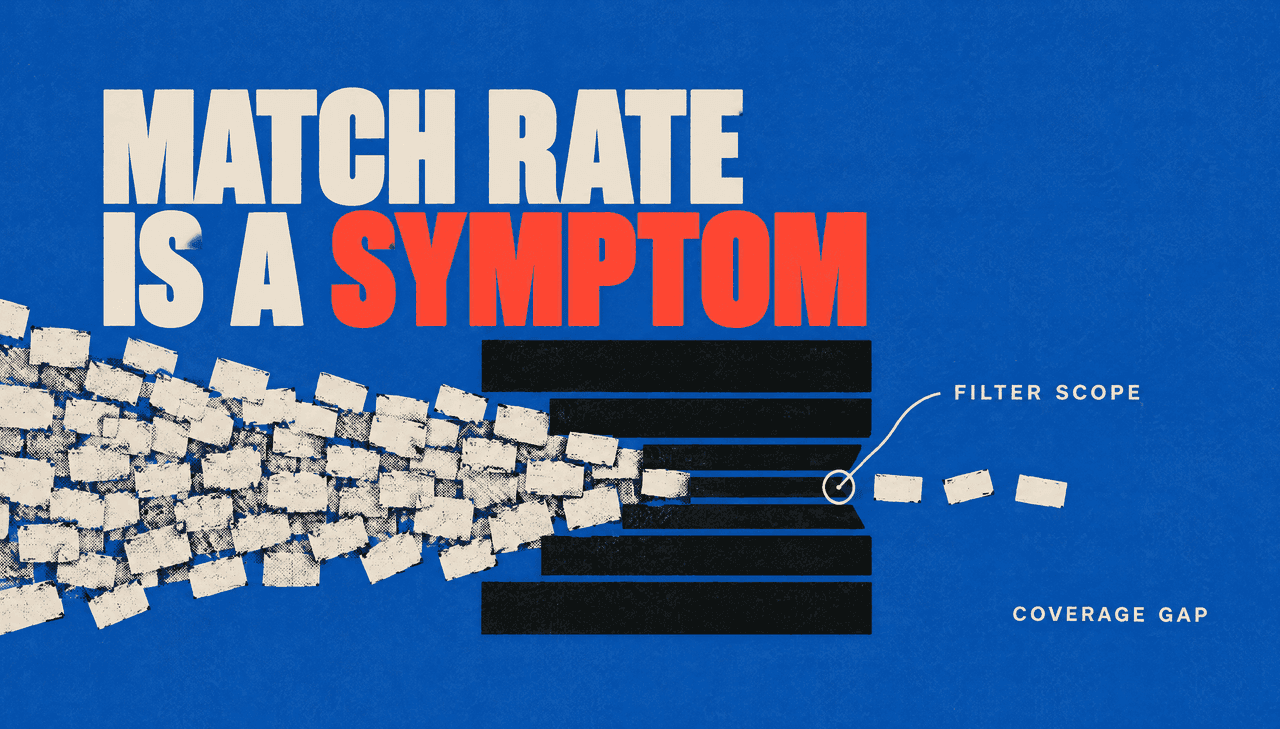
This article explains how to apply lead search filters in a way that improves list quality without collapsing total addressable coverage. It will teach readers when to start broad, which filters to trust first, how to validate segment size before exporting, and how to tighten criteria in stages instead of stacking every possible constraint at once. The piece is designed for operators, agencies, researchers, and sales ops teams who need usable prospect lists rather than tiny, overly restricted segments.