Dievio
Why Agency Partnerships Start with Founder-Level Contacts
If you've spent any time in agency business development, you already know this: partnership deals don't close with a manager. They close with the person who owns the P&L, sets the strategic direction, and decides whether to allocate team bandwidth to a co-marketing initiative or a referral arrangement. That person is almost always a founder, co-founder, or managing partner.
When I talk to operators running agency partnership programs, the most common mistake I see is targeting mid-level contacts first. They'll reach out to a head of growth or a partnerships manager, get a polite "let me run this by the founder," and then watch the deal stall for weeks. The faster path is to start at the top. Founders at agencies—whether it's a 5-person boutique or a 50-person full-service firm—make partnership decisions quickly when the value proposition is clear.
This guide is built for B2B operators who want to build a founder email list for agency partnerships and operationalize it into real co-marketing and referral workflows. We'll cover how to define your ideal agency founder profile, filter by stage and specialty, validate contact accuracy, and build outreach sequences that actually get replies. By the end, you'll have a repeatable system for turning founder contacts into active partnership pipelines.
Defining Your Agency Founder ICP
Before you start pulling lists, you need a clear picture of which agency founders are worth your time. Not every agency is a good partnership fit. A digital marketing agency that serves enterprise clients might be perfect for a referral arrangement, while a dev shop focused on early-stage startups might be better suited for a white-label partnership. The key is to define your Ideal Customer Profile (ICP) for agency founders based on dimensions that matter for partnership success.
Salesforce's framework for B2B lead generation emphasizes that ICPs should be built around firmographic and behavioral signals, not just job titles. Apply that same logic here. Here are the core dimensions I use when segmenting agency founders for partnership outreach:
- Agency specialty: Digital marketing, SEO/PPC, web development, creative studios, management consulting, PR, or specialized niches like healthtech or fintech. Each specialty has different partnership models that work best.
- Company size: Solopreneurs (1-3 people) move fast but have limited capacity. Small agencies (4-15) are often hungry for growth partnerships. Mid-size agencies (16-50) have more resources but slower decision-making. Large agencies (50+) require multi-threaded approaches.
- Geography: Local, regional, national, or global. If you're running co-marketing campaigns that involve events or shared content, geography alignment matters.
- Client focus: SMB, mid-market, or enterprise. An agency serving enterprise clients will have different referral expectations than one serving small businesses.
- Growth stage: Pre-revenue agencies need different partnership models than established firms with recurring revenue. A pre-seed agency might trade services for equity, while a Series A agency wants cash referral fees.
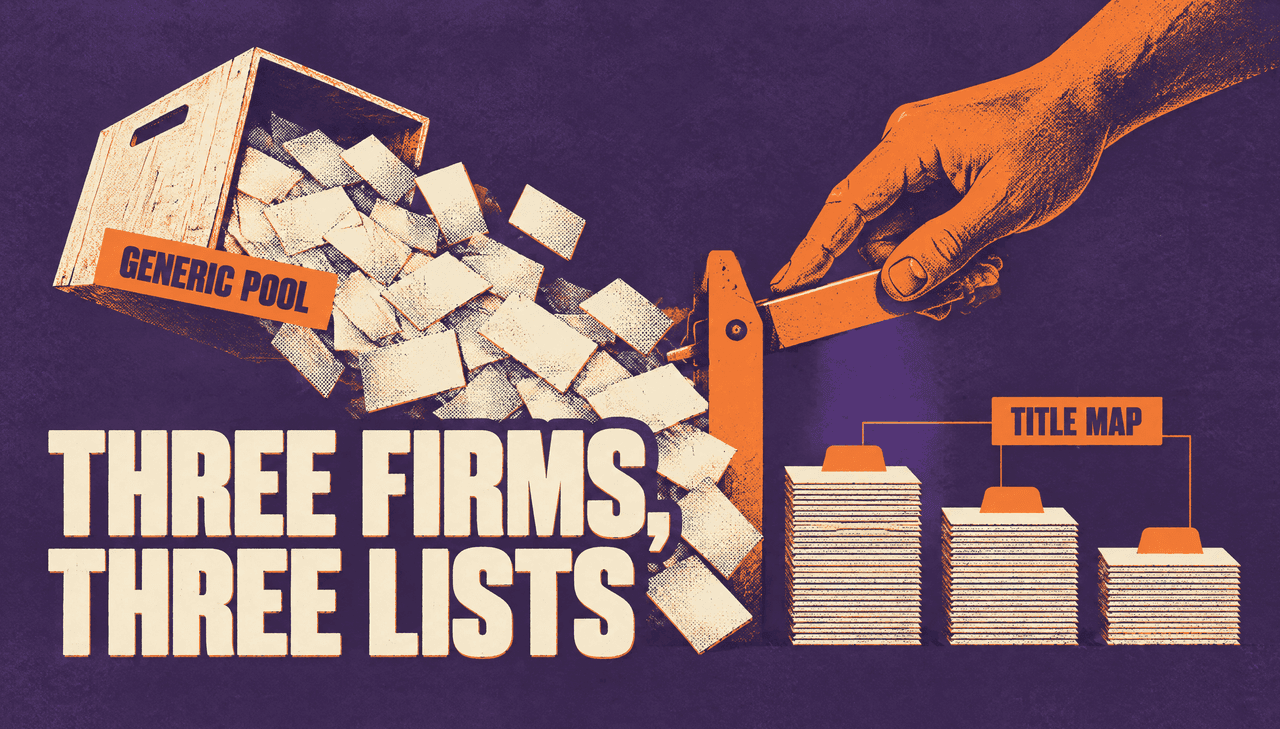
When you're building your founder email list, these dimensions become your filter criteria. You don't want a generic list of agency founders—you want a targeted list of founders whose agencies align with your partnership model. For a deeper look at stage-based segmentation, check out our guide on Company Stage Filters for Founder and CEO Email Lists.
Agency Type Comparison: Who to Target for Each Partnership Model
Not all agency types are created equal when it comes to partnership potential. Some move fast and are eager for co-marketing opportunities. Others are more conservative and prefer referral arrangements with clear commission structures. The table below breaks down five common agency types across six key dimensions to help you decide where to focus your founder email list efforts.
| Agency Type | Partnership Fit | Decision Speed | Revenue Potential | Common Pain Points | Preferred Contact Method | Best Partnership Model |
|---|---|---|---|---|---|---|
| Full-service digital agency | High | Medium (2-4 weeks) | High ($10k+ per referral) | Client acquisition cost, differentiation | LinkedIn DM + email | Co-marketing, referral |
| Specialized boutique (SEO, PPC, CRO) | Very high | Fast (1-2 weeks) | Medium ($5k-$15k per referral) | Scaling beyond niche, seasonal demand | Email with specific idea | White-label, referral |
| Dev shop / tech agency | High | Medium (2-3 weeks) | High ($15k+ per project) | Sales cycle length, technical demos | Email + case study | Co-marketing, integration |
| Management consultancy | Medium | Slow (4-8 weeks) | Very high ($25k+ per engagement) | Brand risk, compliance | Warm intro preferred | Referral, strategic alliance |
| Freelancer collective / network | Medium | Fast (1 week) | Low ($1k-$5k per referral) | Capacity, inconsistent quality | Email with low-commitment ask | Referral, subcontracting |
Use this table as a quick reference when you're filtering your founder email list. If you're building a co-marketing program, specialized boutiques and full-service agencies are your best bets. If you're building a referral network, dev shops and consultancies tend to generate higher-value deals, even if the decision cycle is longer.
Filtering a Founder Email List for Agency Partnerships
Once you've defined your ICP and identified which agency types to target, the next step is filtering. A raw founder email list is useless without proper segmentation. Here's the step-by-step filtering workflow I use for agency partnership prospecting:
Step 1: Role Filter
Start with role-based filtering. You want titles like Founder, Co-Founder, Owner, Managing Partner, or Principal. Avoid generic titles like Director or Manager—those are rarely the decision-makers for partnership deals. In Dievio, you can set the role filter to include multiple title variations to catch everyone who holds founder-level authority.
Step 2: Company Type Filter
Narrow by company type. Look for keywords in the company description or industry tags: Agency, Consultancy, Studio, Firm, Collective, or Practice. You can also filter by specific verticals like Marketing Agency, Web Development, or Management Consulting to avoid wasting credits on non-agency companies.
Step 3: Stage Filter
Company stage matters more than you think. Pre-seed and seed-stage agencies are often bootstrapped and hungry for partnerships that bring immediate revenue. Series A and B agencies have more resources but may require formal partnership agreements. For a complete breakdown of how to use stage filters effectively, see our dedicated guide on Company Stage Filters for Founder and CEO Email Lists.
Step 4: Headcount Filter
Headcount is a proxy for capacity. If you're looking for agencies that can handle referral volume, filter for 10-50 employees. If you want fast-moving, flexible partners, filter for 1-10 employees. If you're targeting enterprise-level partnerships, filter for 50+.
Step 5: Industry Vertical and Geographic Filter
If your product or service is industry-specific, filter by the verticals your agency partners serve. For example, if you sell to fintech companies, look for agencies that list fintech as a client vertical. Geographic filtering is useful if you're planning co-marketing events or need timezone alignment for joint calls.
For additional context, see HubSpot on sales prospecting.
Dievio's filter interface lets you combine all these criteria into a single search. You can preview lead counts before exporting to make sure your segment is large enough to be worth the outreach effort. For a visual walkthrough of the filtering process, the lead search page shows how to stack filters for precise targeting.
Agency Founder Qualification Checklist
Before you start sending emails, you need a qualification framework. Not every founder on your list is ready for a partnership conversation. Use this checklist to score each contact before adding them to your outreach sequence. This approach aligns with LinkedIn's lead scoring principles, which prioritize engagement signals and firmographic fit over raw contact volume.
- Active on LinkedIn with 500+ connections: Indicates they're networked and likely open to new relationships. Check their recent activity—are they posting about client work or industry trends?
- Posts about client work or thought leadership: Founders who share content are easier to engage in co-marketing conversations. They already understand the value of content distribution.
- Has a services page listing complementary offerings: If their services overlap with yours without direct competition, that's a green light for partnership. If they offer exactly what you do, move on.
- Attended or spoke at industry events recently: Event participation signals they're invested in networking and industry visibility—both good signs for a partnership mindset.
- Headcount suggests capacity for referrals: A solo founder might not have bandwidth to handle referral volume. Look for teams of at least 3-5 people if you're expecting regular deal flow.
- Existing client base overlaps with your ICP: The best partnerships happen when both parties serve the same target audience. Check their case studies or client logos for alignment.
Score each founder against this checklist. Anyone scoring 4 or higher is worth reaching out to. For founders scoring 3 or below, consider nurturing them with content before making a direct partnership ask. This qualification step saves you from wasting outreach on contacts who aren't ready or aren't a good fit.
Validating Founder Email Accuracy Before Outreach
Nothing kills a partnership pipeline faster than bounced emails. When you're reaching out to agency founders, you're competing for attention with dozens of other vendors. A bounced email not only wastes your credit but also damages your sender reputation. Here's the validation workflow I recommend before launching any founder email campaign:
- Preview lead counts first: Before spending credits on a full export, use Dievio's preview feature to check that your segment has enough contacts. There's no point validating 50 emails if your target segment only has 30 qualified founders.
- Check bounce rate estimates: Dievio provides estimated bounce rates for each list. If the estimate is above 5%, review your filters—you might be including too many generic domains or outdated company data.
- Use LinkedIn profile lookup for enrichment: Cross-reference email addresses with LinkedIn profiles. If the email domain doesn't match the company listed on LinkedIn, flag it for manual review. The LinkedIn lookup tool is useful for this step.
- Spot-check 10% of your list manually: Pick 10-20 contacts at random and verify their emails by sending a test message or using a verification tool. This gives you a confidence level for the entire list.
- Set up email validation API for programmatic workflows: If you're building automated outreach sequences, integrate an email validation API to verify contacts in real-time before they enter your sequence. This is especially important for high-volume campaigns.
For a deeper dive into data quality and validation best practices, read our article on B2B Data Coverage, Accuracy, and Validation. The principles there apply directly to founder email lists for agency partnerships.
Three-Touch Partnership Prospecting Sequence
Founders are busy. They don't have time for a 7-email sequence with generic value props. Your outreach needs to be concise, specific, and partnership-oriented from the first touch. Here's a three-email sequence I've used successfully for agency partnership prospecting, adapted from HubSpot's prospecting principles that emphasize relevance and timing over volume.
Touch 1: Value Proposition Intro with Specific Co-Marketing Idea
Day 1. Subject line: "Quick idea for [Agency Name] + [Your Company]"
Keep it short. Mention something specific about their agency—a recent case study, a blog post, or a client win. Then propose a concrete co-marketing idea. For example: "I noticed you recently published a guide on conversion optimization for ecommerce brands. We have a complementary tool that helps agencies measure CRO impact. Would you be open to a 15-minute call to discuss a joint webinar?"
The key is specificity. Generic "let's partner" emails get deleted. Specific ideas get replies.
Touch 2: Case Study or Mutual Connection Reference
Day 7. Subject line: "How [Similar Agency] generated $X in referral revenue"
This touch adds social proof. Share a brief case study of a similar agency you've partnered with. If you have a mutual connection, mention them by name. The goal is to show that your partnership model works and that other founders like them have benefited. Keep the email under 150 words and include a clear CTA: "Would you be open to a 10-minute call to see if a similar model could work for you?"
Touch 3: Low-Commitment Ask
Day 14. Subject line: "Quick coffee chat or shared content piece?"
This is the lowest-friction ask. Propose a 15-minute coffee chat (virtual) or a simple content swap—you publish their content on your blog, they publish yours. No long-term commitment required. The goal is to start the relationship, not close a deal. Founders appreciate low-pressure approaches, and this touch often converts when the first two didn't.
For additional context, see Salesforce guide to B2B lead generation.
Timing matters. Space touches 5-7 days apart. Don't send all three in one week—founders need time to process and respond. Track open rates and reply rates by agency type to refine your messaging over time.
Co-Marketing and Referral Workflow Templates
Once a founder responds to your outreach, you need a structured workflow to move from conversation to active partnership. Here are two templates I use regularly—one for co-marketing and one for referrals. Each includes success metrics so you can measure what's working.
Co-Marketing Workflow Template
Objective: Joint content creation or event that generates leads for both parties.
- Week 1: Kickoff call to define topic, format (webinar, guide, case study), and target audience.
- Week 2: Content creation and review. Each party contributes expertise and promotes to their list.
- Week 3: Launch. Co-host webinar or publish co-branded content. Track registrations, attendees, and leads generated.
- Week 4: Follow-up. Share leads with attribution. Evaluate ROI and decide on next collaboration.
Success metrics: Number of new leads generated per partner, cost per lead, content engagement rate, and partner satisfaction score.
Referral Workflow Template
Objective: Ongoing referral arrangement with clear commission structure.
- Month 1: Sign referral agreement. Define commission percentage (typically 10-20% of first-year contract value) and referral tracking method.
- Month 2: Set up referral links or tracking codes. Train both teams on how to identify and submit referrals.
- Quarterly: Check-in call to review referral volume, conversion rates, and payout amounts. Adjust commission structure if needed.
- Annual: Review partnership performance. Decide whether to renew, expand, or sunset the arrangement.
Success metrics: Number of referrals submitted per quarter, referral-to-closed deal conversion rate, average deal size from referrals, and total referral revenue generated.
Both workflows benefit from CRM tagging. Tag each partner with their partnership type (co-marketing or referral), start date, and deal size range. This makes it easy to run reports on which partnership models are driving the most revenue.
Measuring Partnership Pipeline from Founder Outreach
You can't improve what you don't measure. When you're running founder email campaigns for agency partnerships, track these key metrics to understand what's working and where to iterate:
- Response rate by agency type: Which agency types reply most frequently? If full-service agencies respond at 15% but dev shops respond at 5%, adjust your messaging or targeting accordingly.
- Partnership agreement close rate: How many conversations turn into signed partnership agreements? A healthy close rate is 10-20% for co-marketing and 5-10% for referral arrangements.
- Co-marketing campaign ROI: Track leads generated, cost per lead, and revenue attributed to each co-marketing campaign. Compare this to your other acquisition channels.
- Referral revenue generated: This is the ultimate metric for referral partnerships. Track total revenue from referrals, average deal size, and partner lifetime value.
Set up a CRM pipeline specifically for partnership deals. Create stages like: Initial Outreach, Discovery Call, Proposal Sent, Agreement Signed, Active Partnership. Tag each deal with the agency type and partnership model so you can run segment-level reports. Over time, you'll build a data-driven understanding of which founder profiles and outreach approaches generate the best partnership outcomes.
Building a Scalable Founder Partnership List
Let's tie it all together. Building a founder email list for agency partnerships isn't a one-time project—it's an ongoing workflow that you refine as you learn which agency types, stages, and specialties perform best. Here's the end-to-end process:
- Define your ICP: Agency specialty, size, geography, client focus, and growth stage.
- Filter your list: Use role, company type, stage, headcount, and vertical filters to build a targeted segment.
- Qualify contacts: Score each founder against the qualification checklist to prioritize outreach.
- Validate emails: Preview, check bounce estimates, enrich with LinkedIn, and spot-check manually.
- Run outreach sequences: Use the three-touch sequence tailored to partnership prospecting.
- Measure and iterate: Track response rates, close rates, and revenue by agency type and partnership model.
As your partnership program scales, you'll want to automate list building and enrichment. Dievio's API workflows let you build recurring founder lists programmatically, pulling fresh contacts based on your ICP filters and pushing them directly into your CRM or outreach tool. This turns your founder email list from a static export into a living pipeline that updates as new agencies enter your target market.
Ready to build your founder email list for agency partnerships? Start with a targeted founder email list and apply the filters and workflows we've covered here. Your next co-marketing partner is one founder email away.
Related workflow: CEO Email List Strategy for Executive Outreach.
Related workflow: Decision Maker Email List: Multi-Stakeholder Segmentation for Complex Sales Cycles.
Build Your First Outbound List to validate the segment before you commit to full outreach.